Norck uses strictly necessary cookies to run this site. With your permission, we would also use Google Analytics to see how the site is used, and Google Ads to measure our advertising. We do not sell your data.
You can change your choices at any time under Privacy choices at the foot of every page, or by writing to info@norck.com. See the privacy statement for details.
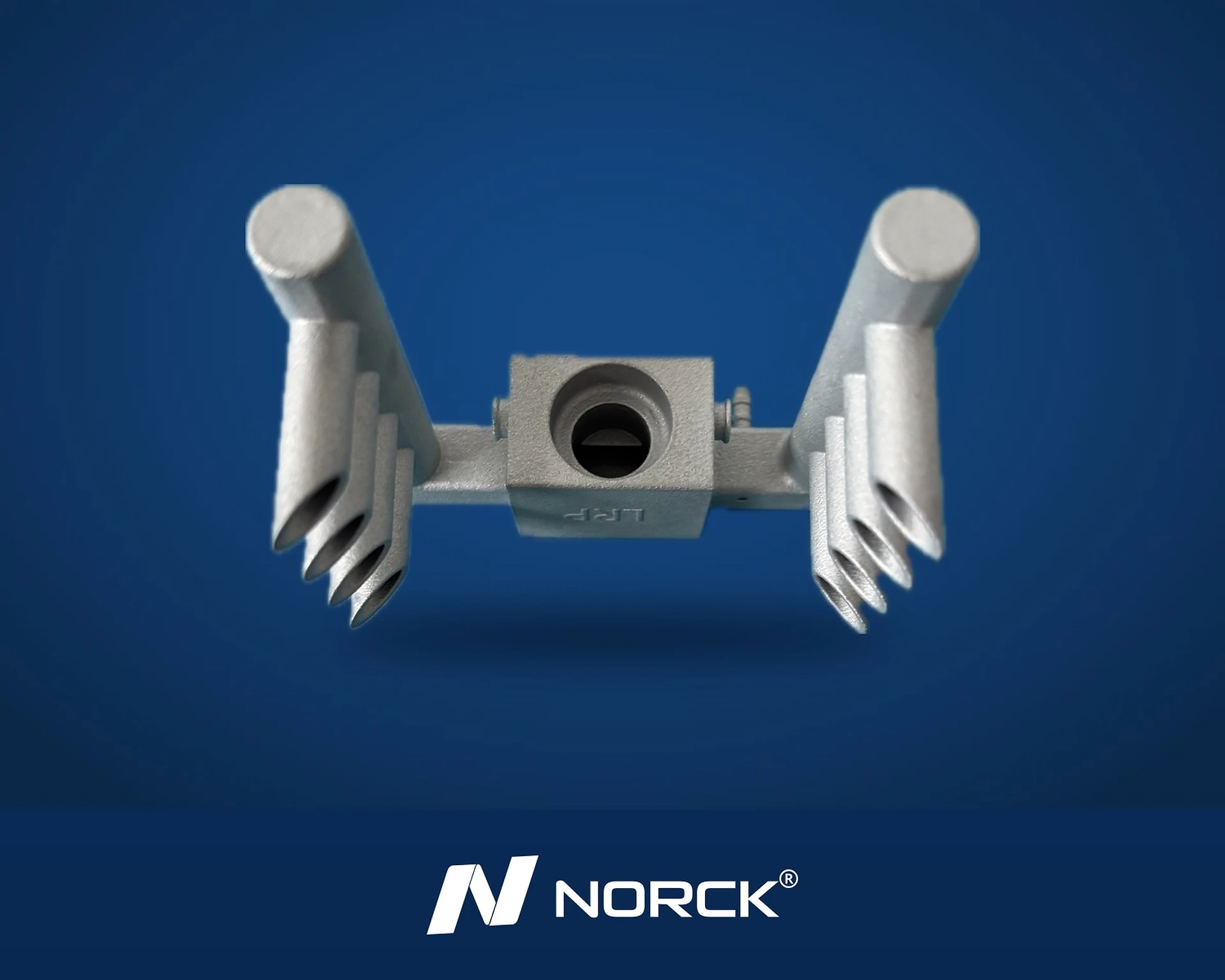
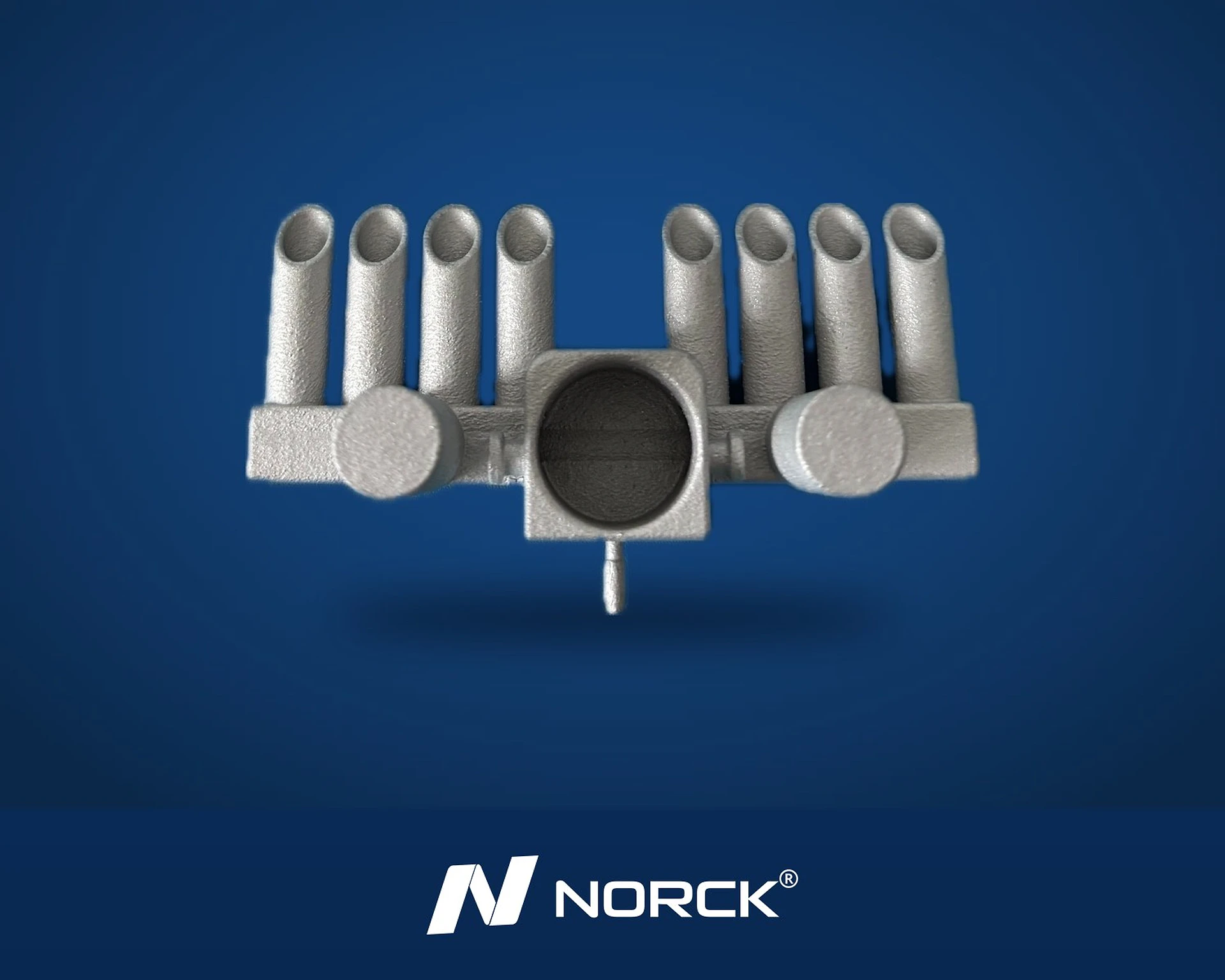
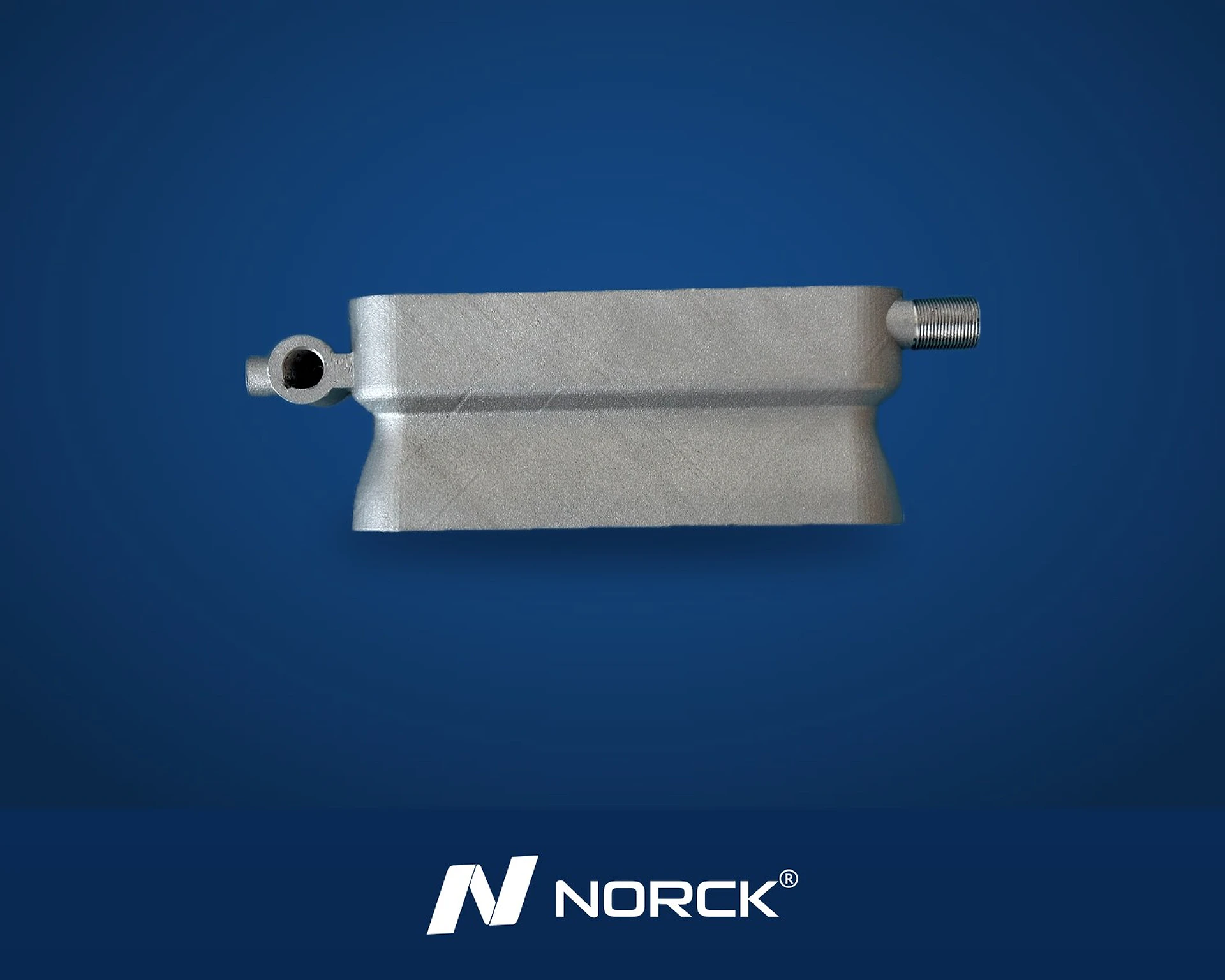
HP Multi Jet Fusion is an additive manufacturing process invented by Hewlett-Packard. In which particles from a bed of plastic powder are fused to produce parts and assemblies. It helps turn designs into scaled prototypes as close to the designed model. It is mainly used in the earliest stages of product development and can be used in conceptual models, functional prototypes, tooling, electronics, and medical industries.
3D printing requires 3D CAD models to print a part or assembly. The 3D models can be made using parametric CAD software such as Solid works and CATIA V5, or Subdivision modeling software such as 3DS and Blender.
Trusted by Engineers and Researchers at Fortune 500 Companies for Precision Manufacturing
Trusted manufacturing experience with leading global companies.
Lockheed Martin
Nucor Insulated Panel Group
Sumitomo Electric Interconnect Products
Saint-Gobain Performance Plastics Pampus GmbH
3M
FritoLay
Parker Hannifin Corporation
Lear Corporation
Boston Scientific
General Dynamics – OTS Canada
Land O'Lakes
ITW Food Equipment
KLA-Tencor
Fastenal
Volvo Construction Equipment
Saft Batteries
Hemlock Semiconductor
How is it fabricated?
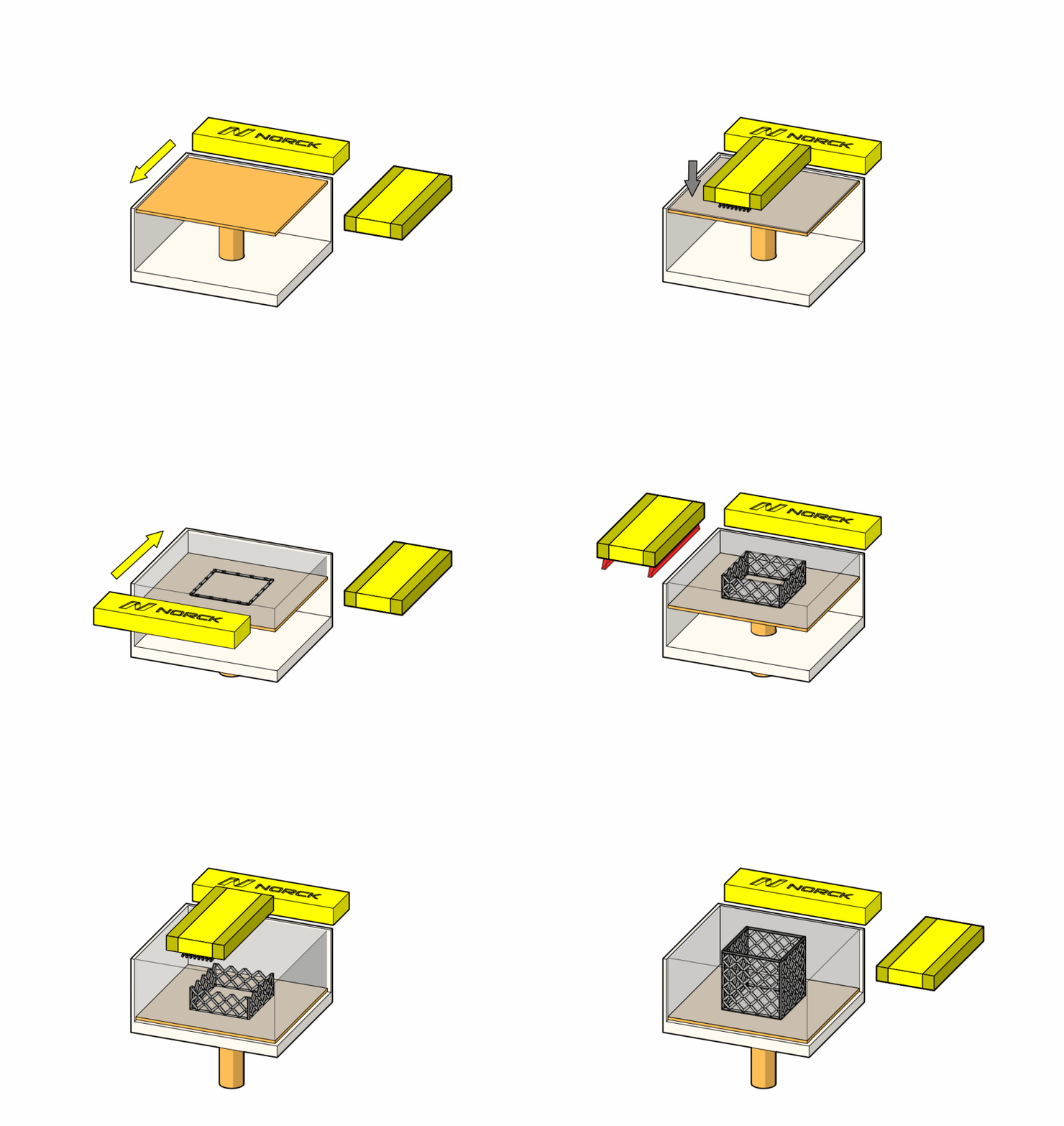
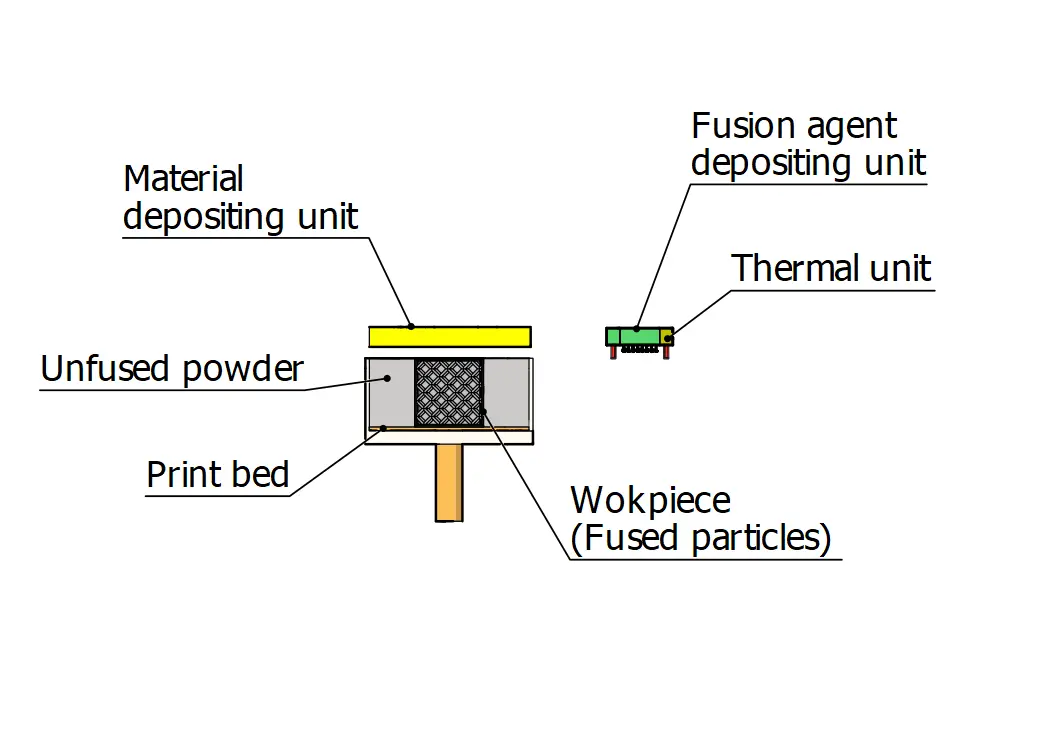
In HP multi-fusion jet, the 3D printer slices the 3D model into several cross sections and prints them layer by layer.
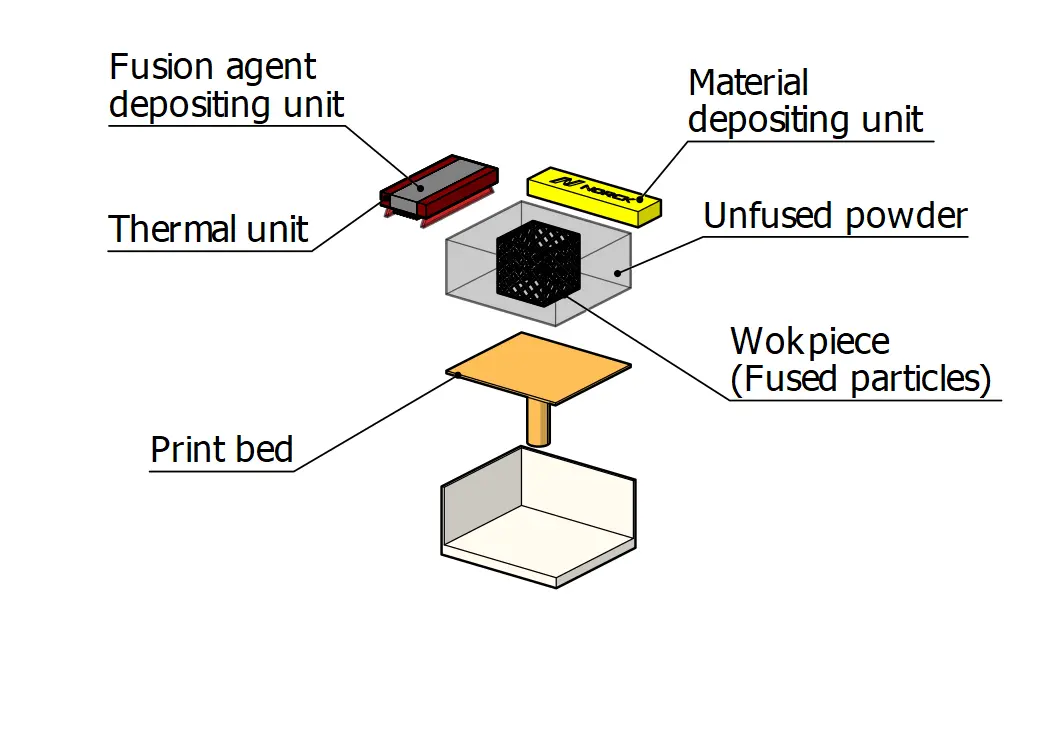
A material depositing unit deposits each layer of powder material upon a print bed.
A thermal unit moves across the print bed to deposit a fusing agent and detailing agent.
The fusing agent is deposited where powder particles should fuse; the detailing agent is applied to the contour to help cool the part.
Infrared light in the thermal units merges the particles to form the desired shape.
Once the 3D printed model is finished, it should cool down before being removed from the platform.
Post-processing might be required to remove any excess material and burrs or to smoothen surfaces.
HP Multijet Fusion Printing
- Most used materials:• PA 11• PA 12• PA 12 40% GF• PPParts and assemblies should follow specific design rules to be printed correctly. Norck offers engineering services that will help you confirm your design for 3D printing.
What are the advantages & disadvantages of using MJF?
HP MJF is used over other 3D printing processes due to: - cost-effective - fast process - Models don’t need support structures - Minimum feature size 0.02” (0.5mm) - Material is isotropic (97%) - Reusable powder
Although there are disadvantages to using HP MJF: - Printers and materials are proprietary to HP - Limited materials selection - Limited colors - Post-Processing required
Norck: Unlock Innovation with HP Multi Jet Fusion
Norck delivers rapid, high-quality HP Multi Jet Fusion solutions and MJF 3D printing service capabilities, empowering engineers, designers, and manufacturers across aerospace, automotive, robotics, medical, and other sectors to push the boundaries of design and production.
Norck's Engineering Edge: MJF as a Manufacturing Solution
Design for Additive Manufacturing (DfAM): Expert guidance to optimize parts for MJF, maximizing design freedom, minimizing material use, and ensuring cost-effective outcomes.
Material Selection & Performance Testing: Matching the right MJF material to your strength, flexibility, environmental, and application-specific needs.
Process Optimization & Simulation: Software-assisted analysis to fine-tune print parameters for optimal part density, surface quality, and dimensional accuracy.
Rigorous Quality Assurance: Dimensional inspection, mechanical testing, and process control for reliable, repeatable part production.
Norck: Your Data-Driven Partner for On-Demand Manufacturing Excellence
Norck is a technology-powered manufacturing leader specializing in CNC machining, 3D printing, sheet metal fabrication, and injection molding. Our intelligent, data-driven approach ensures exceptional quality, optimized costs, and seamless supply chain management for companies worldwide.
Experience the Norck difference. Get a quote fast for your manufacturing needs today!
Frequently Asked Questions
1. What is HP Multi Jet Fusion (MJF) and what is it used for?
HP Multi Jet Fusion (MJF) is an additive manufacturing process used to produce prototypes, functional components, and low-volume production parts directly from digital designs. It enables manufacturers to create complex geometries with consistent quality, making it an effective solution for product development, functional testing, and manufacturing applications.
2. What are the benefits of using an MJF 3D printing service?
An MJF 3D printing service enables manufacturers to efficiently produce prototypes, functional components, and low-volume production parts while shortening product development cycles. The process supports rapid design validation, design iterations, and the production of multi jet fusion parts, making it a practical manufacturing solution for a wide range of applications.
3. When should I choose HP Multi Jet Fusion for my project?
HP multi jet fusion is well suited for rapid prototyping, functional testing, and low-volume production when fast turnaround and design flexibility are important. It is commonly used to manufacture multi jet fusion parts for applications requiring complex geometries and consistent manufacturing quality.
4. What types of parts can be manufactured using HP Multi Jet Fusion?
HP multi jet fusion is used to manufacture prototypes, functional components, and low-volume production parts with complex geometries. The process is suitable for producing multi jet fusion parts that require consistent quality and support a wide range of product development and manufacturing applications.
5. How can I request a quote for a custom HP Multi Jet Fusion project?
You can request a quote by submitting your CAD files, technical drawings, material preferences, production quantities, and project specifications. Norck reviews your manufacturing requirements and recommends the most appropriate MJF 3d printing service for your application, including HP multi jet fusion 3d printed parts when appropriate. Contact Norck to discuss your project and request a custom quote.