 Deutsch
 English
 Español
 Français
 Italiano
 Nederlands
 Dansk
Dansk Svenska
 Norsk
Norsk Czech
Czech Polski
 Português

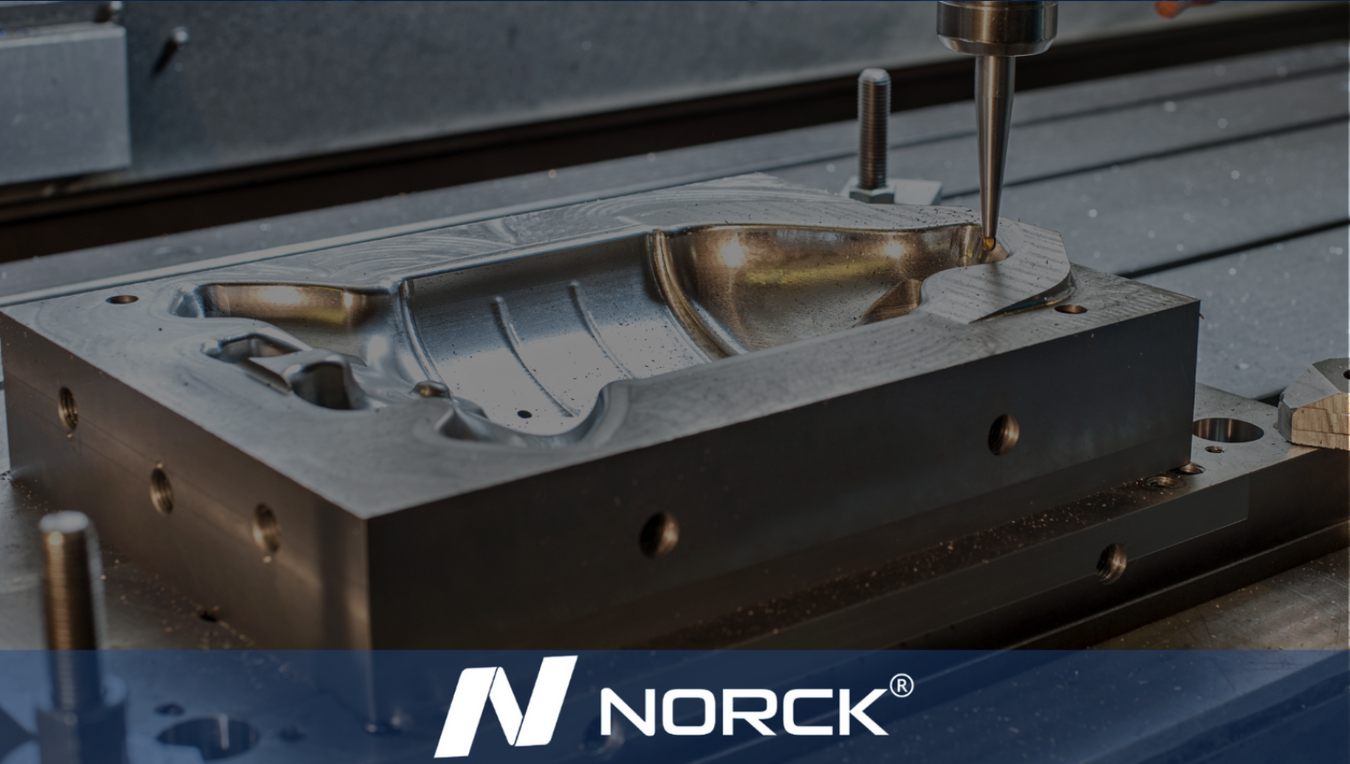
Norck: Rapid Prototype Tooling for Fast Injection Molding Iteration
Norck delivers rapid prototype tooling solutions for injection molding, empowering businesses across diverse industries to validate designs, test functionality, and bridge to production with speed and cost-effectiveness.

Norck is certified with the ISO 9001:2015 quality management system, showcasing its dedication to excellence. Key aspects include:
This certification reflects Norck’s ongoing commitment to quality and performance.
Click to view our ISO 9001:2015 certification.
There are mainly three toolings used for injection molding projects: prototype, bridge, and production tooling.

Prototype molding is used for a low-volume injection molding process to validate a design in terms of functionality, appearance, and assembly.
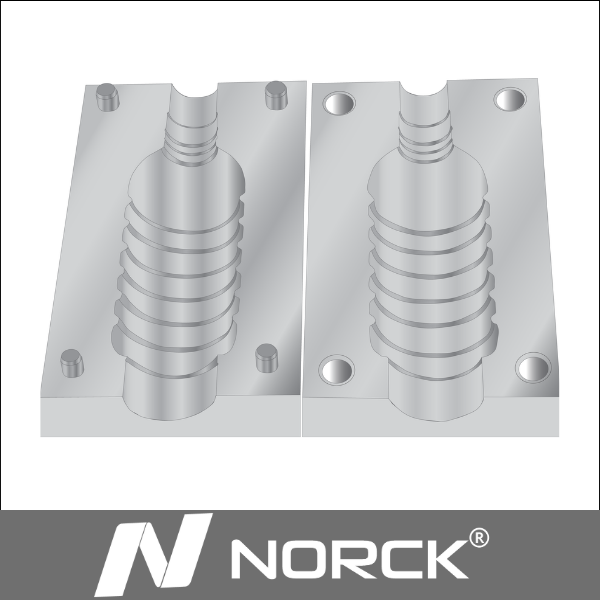
Its mold is made from aluminum or mild-grade steel, so it is cost-effective compared to a production mold. But it might wear quickly due to the soft material.
Prototype molding offers many advantages:
• Cost effective: Cost is reduced due to the prototype mold material (Aluminum/mild steel)
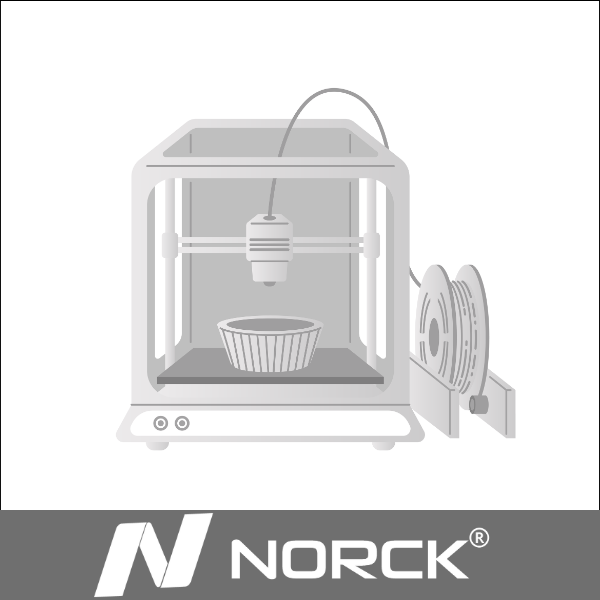
• Accurate parts: Prototype molds are ideal for prototyping, better than 3D printing, as it produces accurate details with conforming dimensions to the CAD models.
• Design validation:
Can help designers and clients decide on the shape, materials, finishings, features, gaps, and textures of a part before launching the production tooling
But there are some disadvantages as well:
- Low volume production: Only one cavity can be made for each mold
- Wears quickly: <500 shots
- Limited modifications: Can’t be welded (adding material)
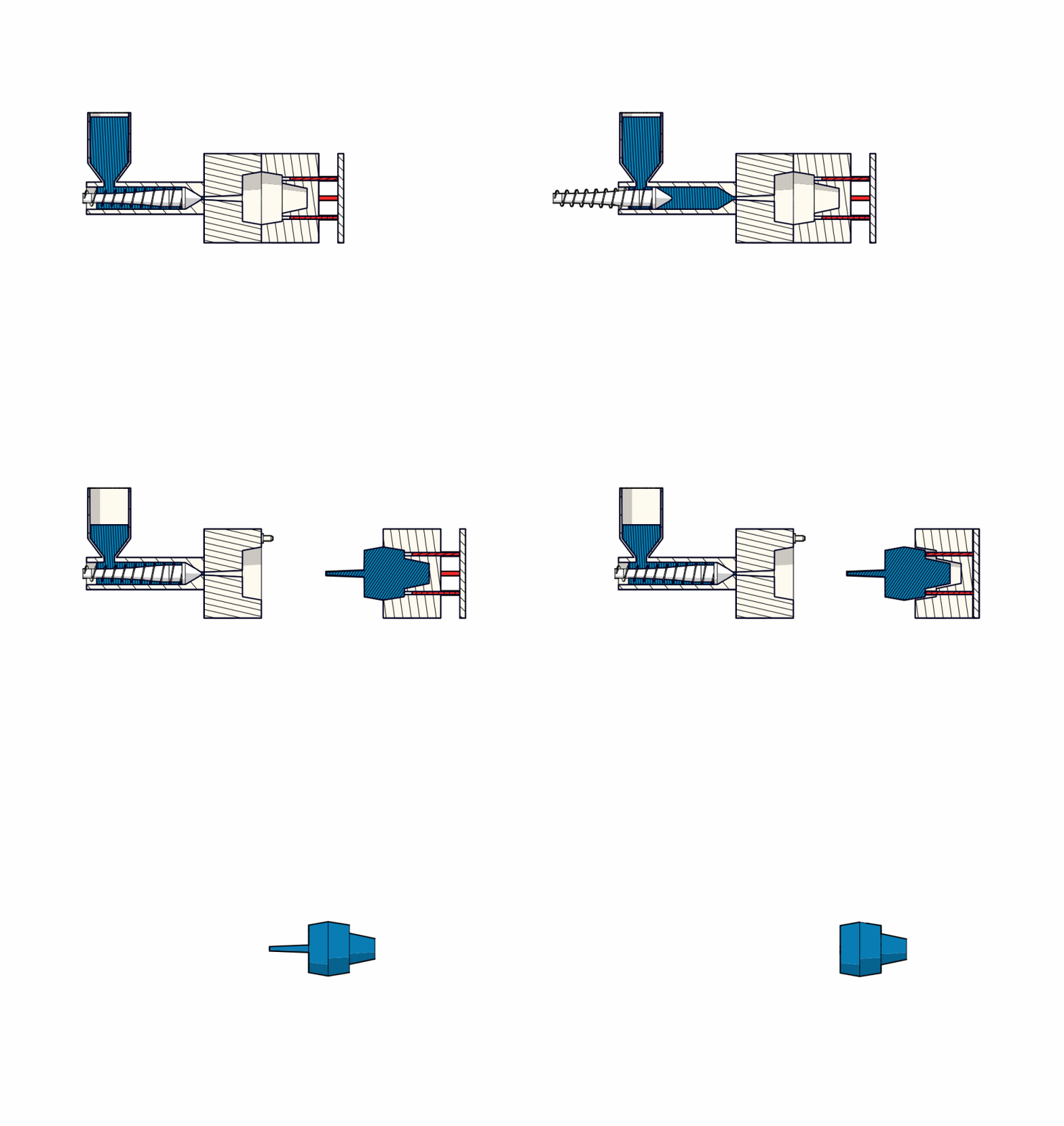
Prototype injection molding is made through four steps:
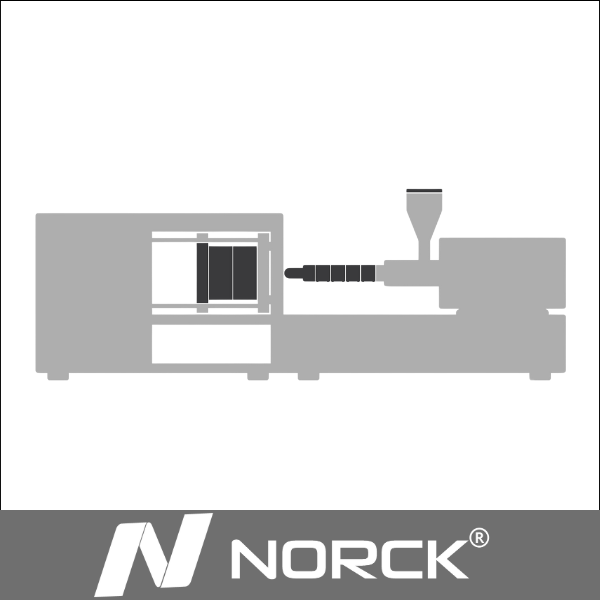
1. Plastification: The plastic granules are transferred from the hopper to the mold using a rotating screw and molted using heaters.
2. Injection: The screw will advance to increase pressure in the injection chamber to inject the molted plastic into the mold. The two cavities are maintained close until the plastic solidifies.
3. Cooling: After injection, the molted plastic will be cooled down to become solid using a cooling circuit. The screw will hold its position to hold the pressure inside the mold.
4. Ejection: After the molted plastic solidifies using a cooling circuit, the Die is opened, and the part is ejected via ejector pins. The screws will retreat to prepare for the next injection.
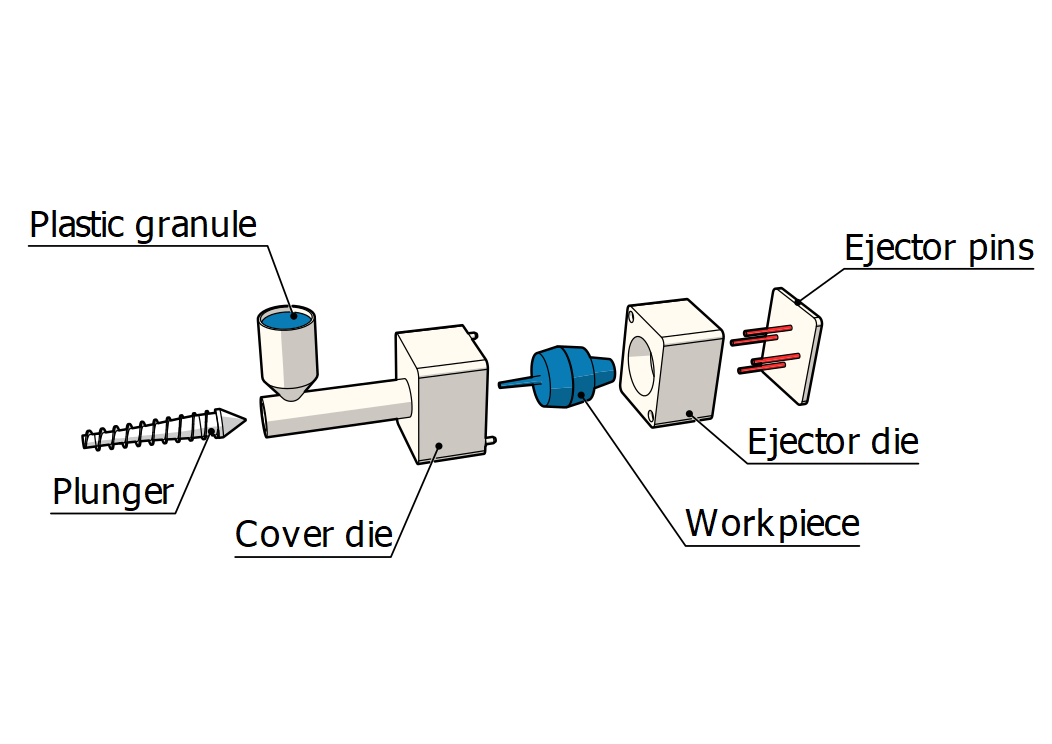
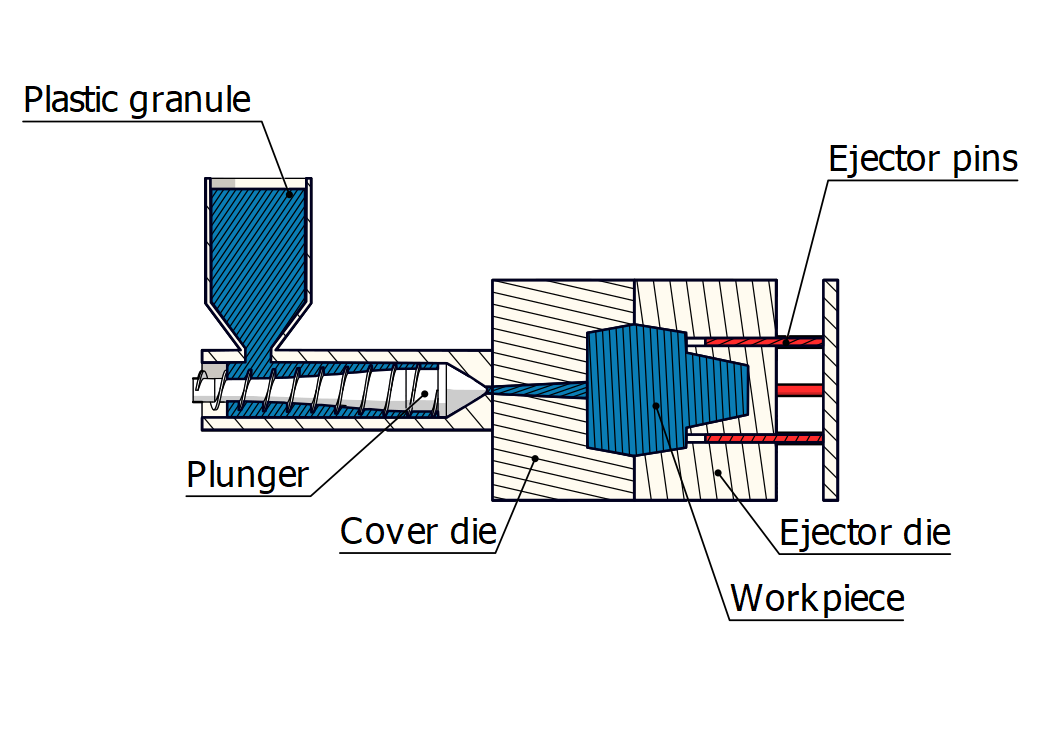
Obtaining a fully functional part might require extra processing for features that can’t be made with the Prototype molding process, such as taping. The designed part should follow Prototype molding design guidelines.
Norck is a technology-powered manufacturing leader specializing in CNC machining, 3D printing, sheet metal fabrication, and injection molding. Our intelligent, data-driven approach ensures exceptional quality, optimized costs, and seamless supply chain management for companies worldwide.
Key Services:
Why Choose Norck?
Experience the Norck difference. Get a quote fast for your manufacturing needs today!
Prototype molding is a manufacturing process used to produce prototype plastic parts from customer-supplied CAD files or technical drawings before production. It helps evaluate part design, fit, and functionality during product development. If your design is ready, you can request a quote with your project specifications.
Prototype plastic injection molding is a practical solution for producing prototype parts that match customer design requirements before production. Using customer-supplied CAD files or technical drawings, it supports design verification by manufacturing components according to project specifications.
Rapid prototype molding is used to manufacture prototype plastic parts for product development and design evaluation before production. The process produces components from customer-supplied CAD files or technical drawings, allowing designs to be reviewed and evaluated prior to manufacturing production parts.
Prototype injection molds are used to manufacture prototype plastic parts that help evaluate product designs before production. They enable prototype components to be produced according to customer specifications so design requirements can be reviewed during the product development process.
To request rapid injection molding prototyping, submit your CAD files or technical drawings along with your material requirements, quantities, and project specifications. Providing complete project information helps Norck review your manufacturing requirements and prepare an accurate quotation for your prototype molding project. If your design is ready, you can request a quote by submitting your project details.
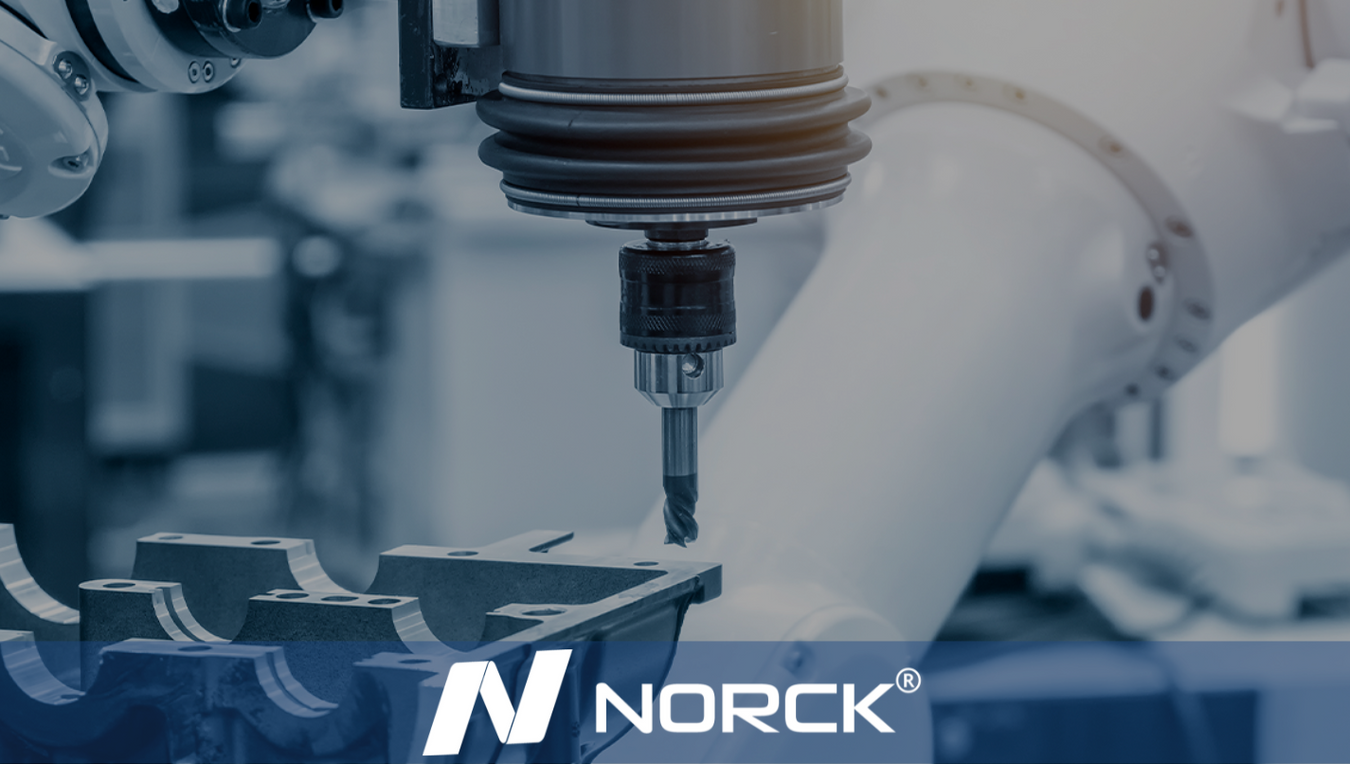
Unlock the vast mount of CNC machining capacity with Norck for custom component manufacturing, precision metal and plastic manufacturing.
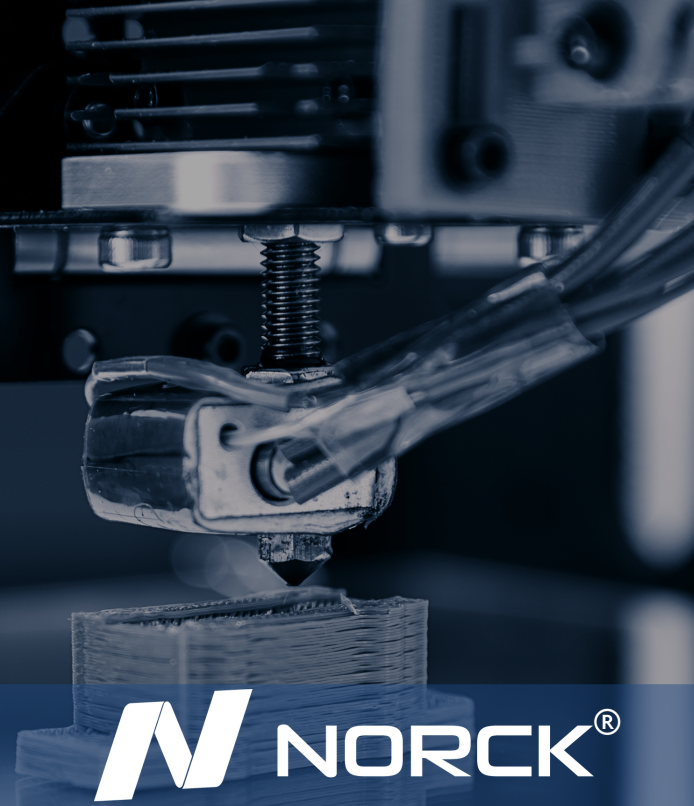
Whether you need 3D-printed parts in plastic or metal, Norck has the right capacity and solution for you.

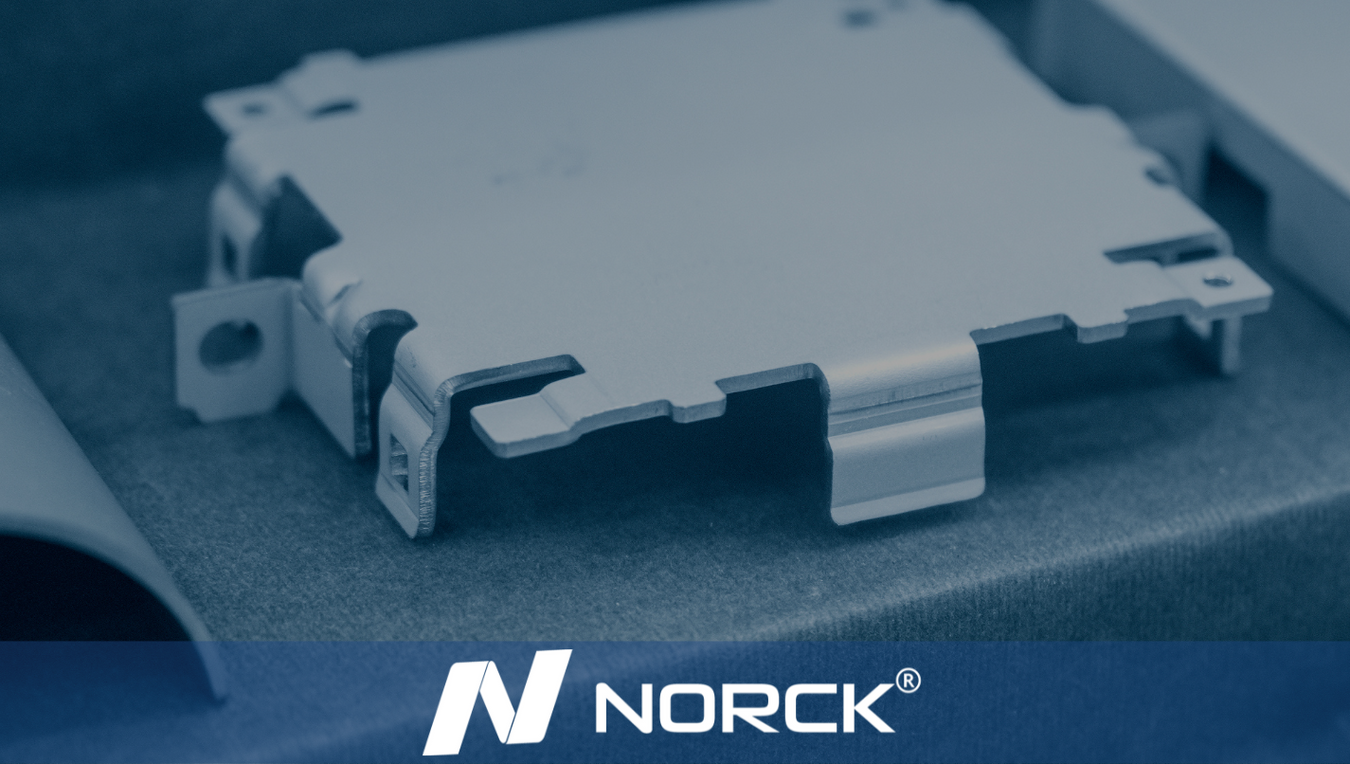
Thousands of companies around the world rely on Norck's vast capacity and its extremely qualified capabilities to get their sheet metals fabricated.
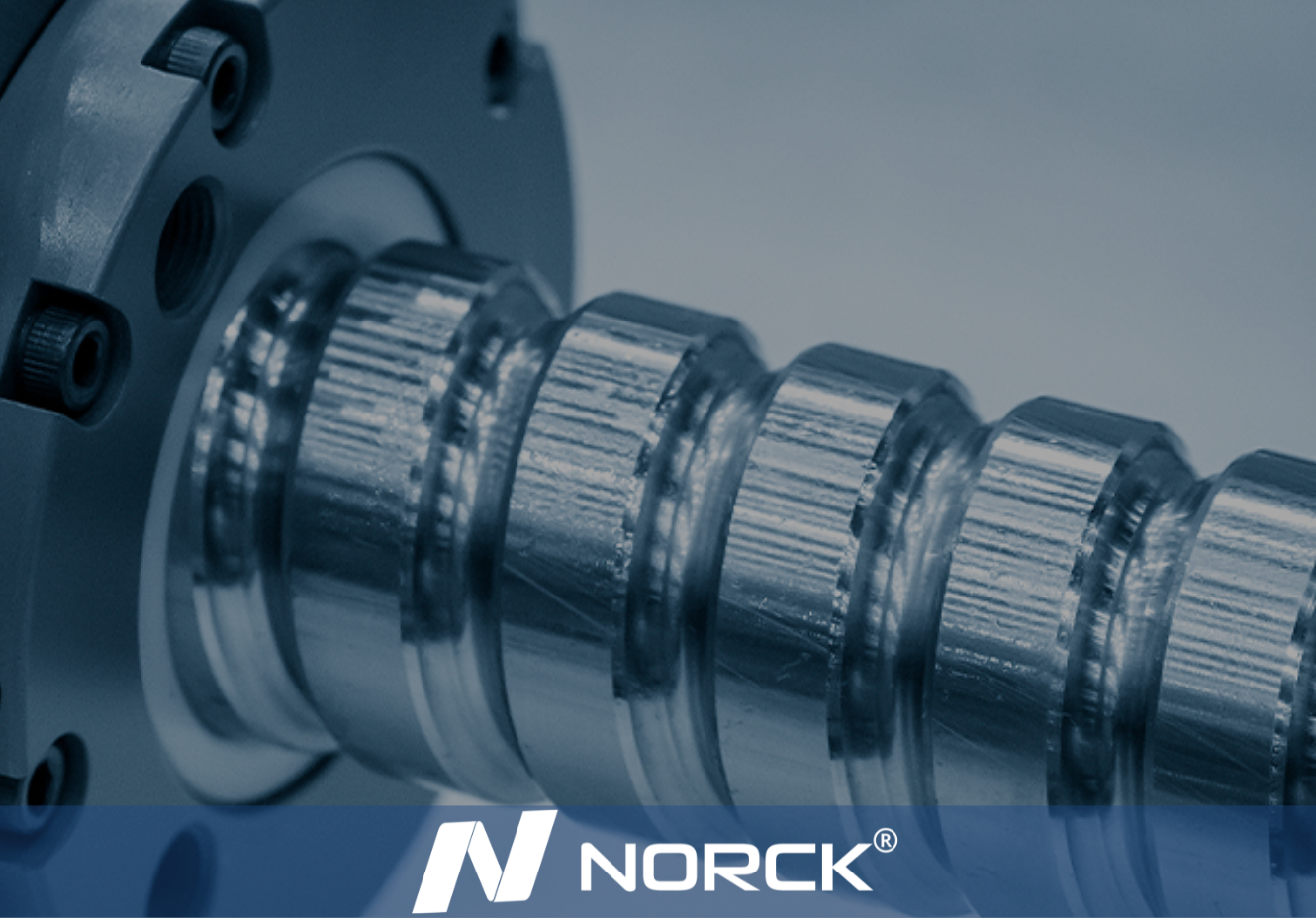
Norck's advanced CNC machining capabilities include precision turning, milling, grinding, and honing.
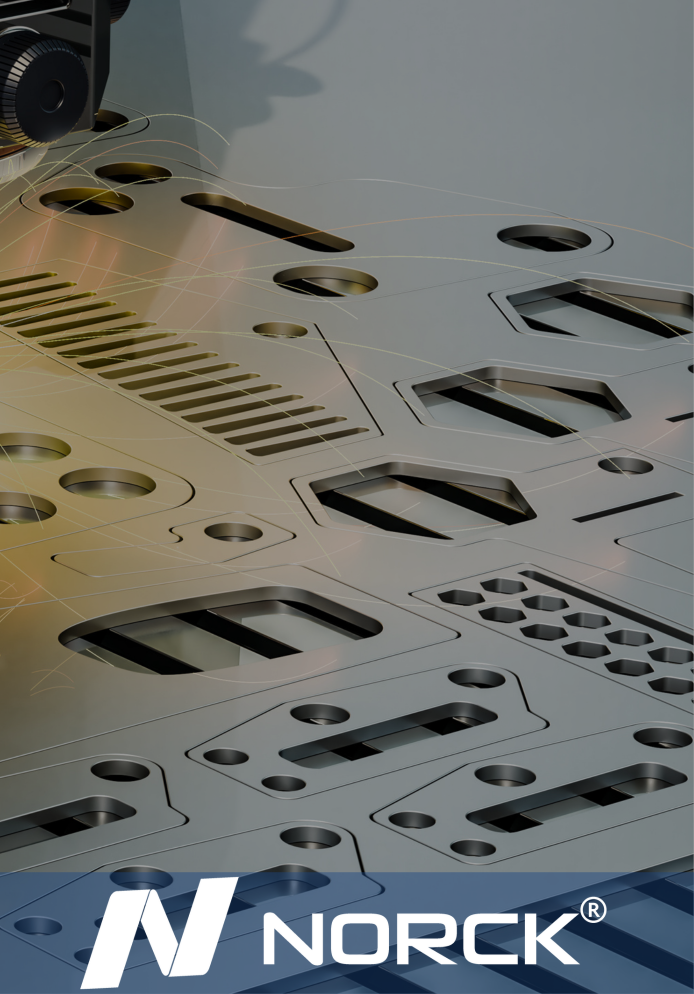
Norck provides precision CNC cutting services such as laser cutting, plasma cutting, and waterjet cutting.
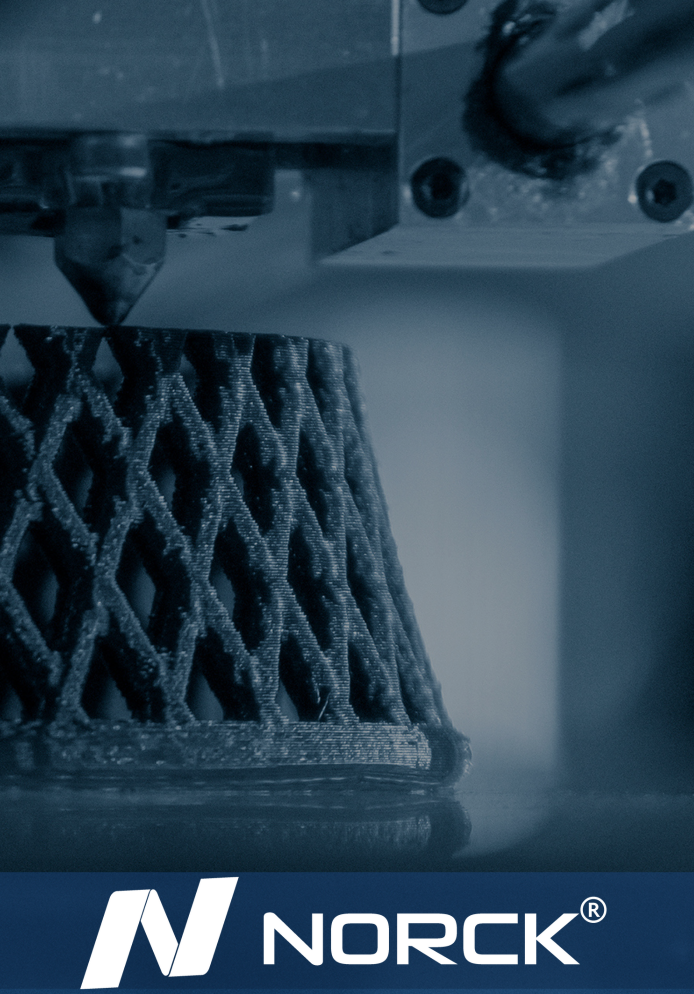
Norck's on-demand 3D printing and additive manufacturing services include nearly all 3D printing methods and technologies.
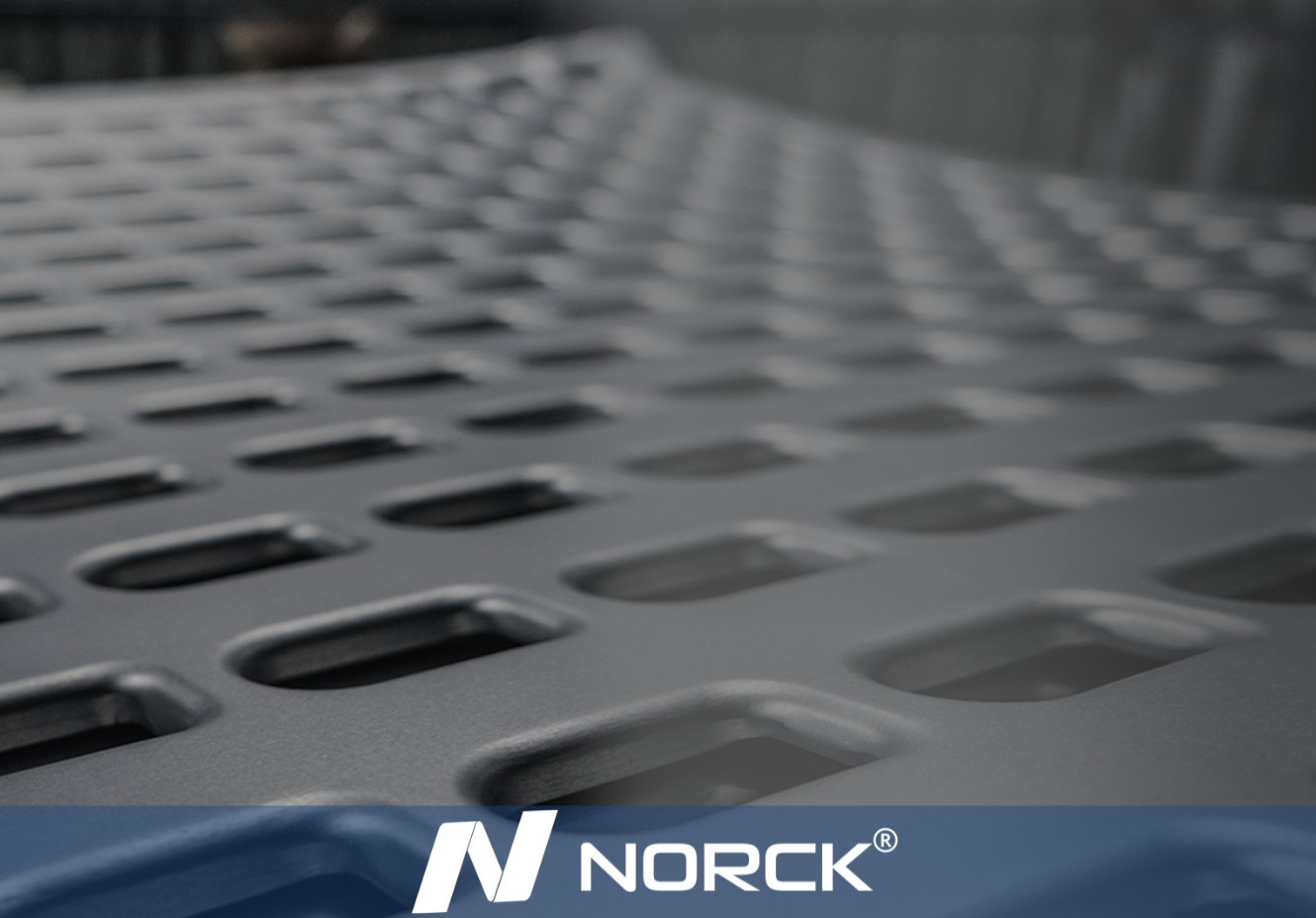
Norck's advanced technical and technological capabilities make it one of the most on-demand sheet metal fabrication companies across the world.
Looking for a reliable, lifelong supplier to manufacture your next custom metal parts? Click to learn more about Norck’s capabilities in On Demand CNC machining.
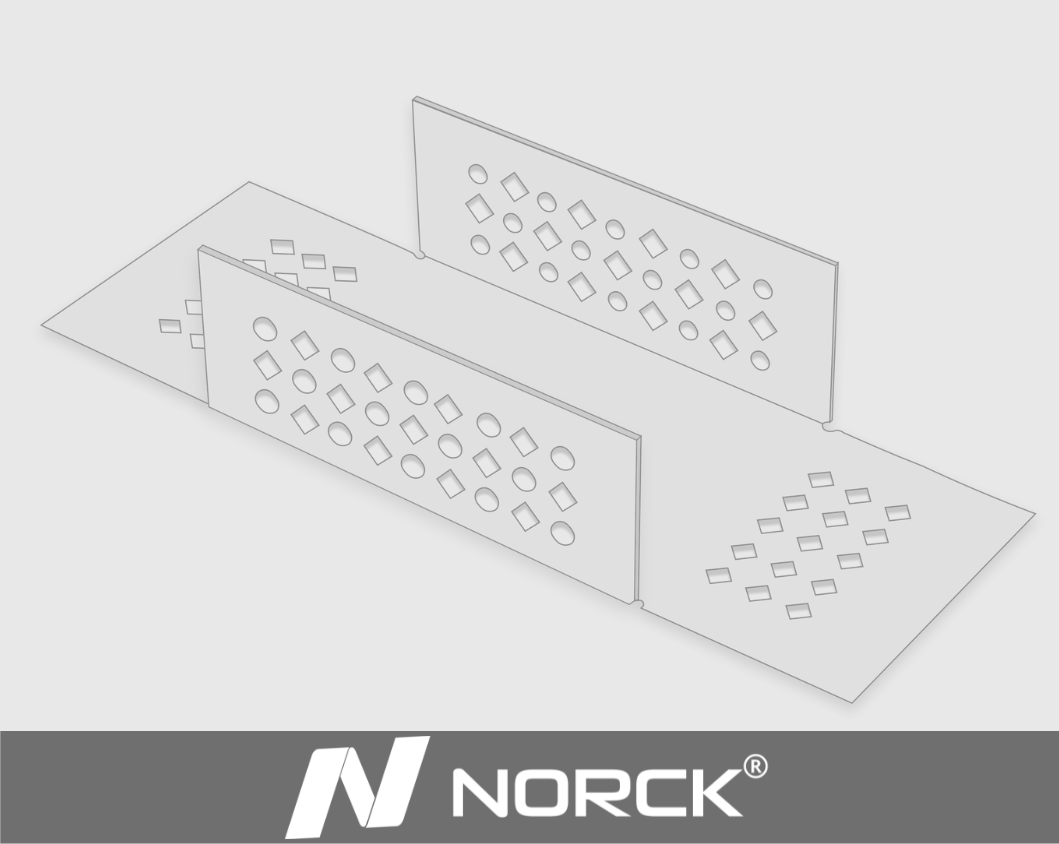
All industries including consumer products, electronics, energy, hardware, aerospace, defense, automotive, robotics, machinery are covered.
In a hurry to test before embarking on a full scale production or need high volume production? Turn to Norck for its advanced 3D printing and rapid prototyping services for your next project.
Get a quote for your next sheet metal part, custom part made with CNC machining, or 3D printing.