 English
 Deutsch
 Español
 Français
 Italiano
 Nederlands
 Dansk
 Svenska
 Norsk
 Czech
 Polski
 Português
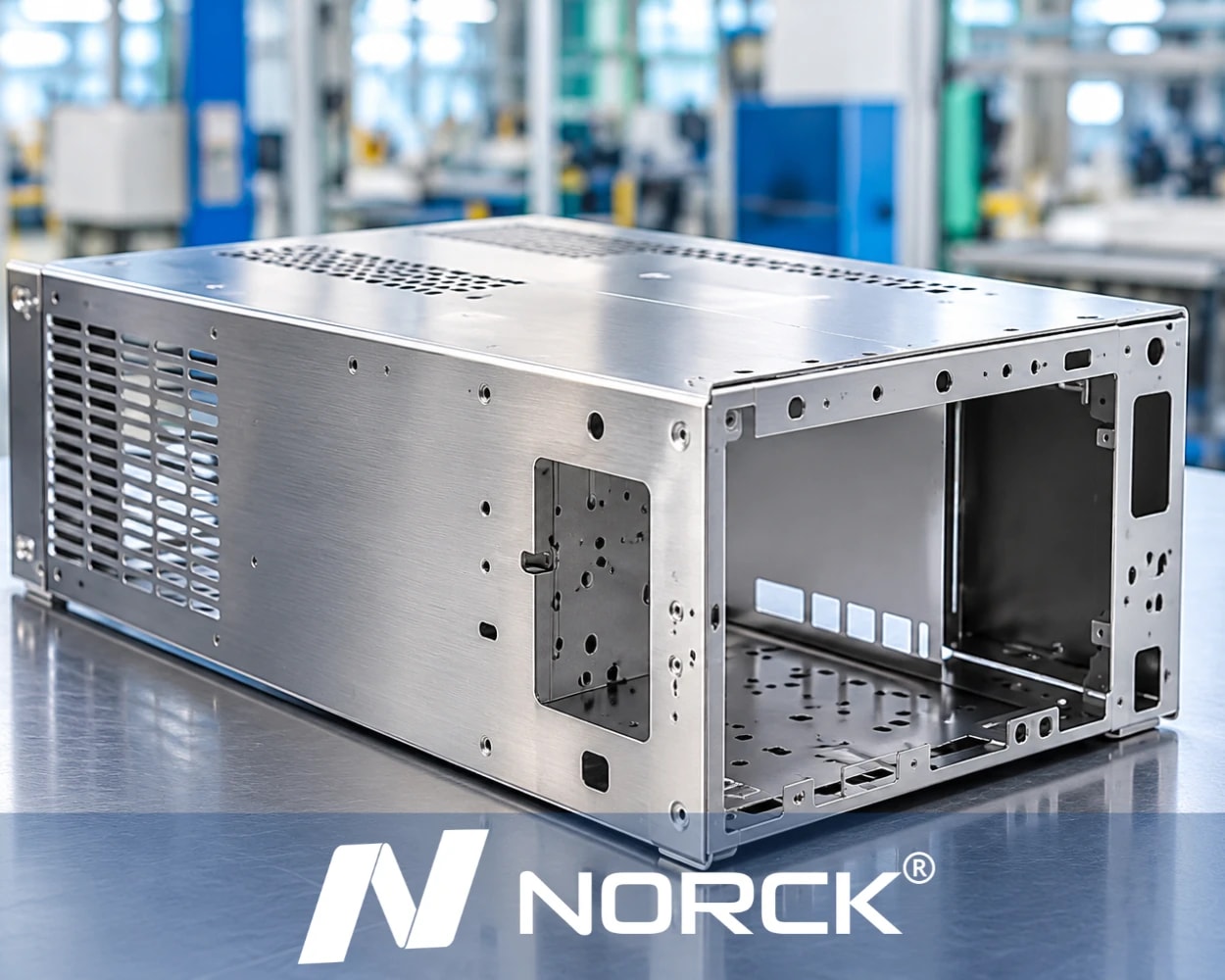
The Future of Sheet Metal Fabrication: Automation, Laser Technology and Smart Production
Sheet metal is everywhere: in vehicle bodies, machine enclosures, electrical cabinets, HVAC systems, kitchen equipment and robot frames. It is one of the oldest manufacturing methods, yet sheet metal fabrication is being transformed by fiber lasers, automated bending, smart software and new materials.
Europe plays a leading role in this transformation. Many of the world’s best-known laser cutting and press brake manufacturers are based in Germany, Switzerland, Austria and Italy, and EuroBLECH in Hanover is the industry’s largest trade fair. From automotive suppliers in Germany and the Czech Republic to machinery builders in Lombardy, sheet metal fabricators are investing in faster and smarter production.
In this article we look at the latest breakthroughs in sheet metal fabrication, what they mean for engineers and buyers, and where the industry is heading.
Advances in Cutting Technology
Cutting is the first step in almost every sheet metal part, and it has changed dramatically.
Fiber lasers take over
Fiber lasers have largely replaced CO2 lasers in modern shops. They cut thin and medium sheets much faster, use less energy and need less maintenance. High-power systems now cut thick steel plates that once required plasma. Modern laser cutting services deliver accurate cuts with narrow kerfs and clean edges, including laser tube cutting for frames and structures.
Waterjet for heat-sensitive materials
Waterjet cutting uses no heat, so there is no heat-affected zone or distortion. It cuts metals, composites, glass and stone, and is ideal for thick plates and materials that must keep their properties at the edge.
Smarter plasma cutting
High-definition plasma cutting has improved edge quality and hole accuracy, making it a cost-effective choice for thick structural steel.
Combined punch-laser machines
Machines that combine punching and laser cutting produce holes, forms, louvers and contours in a single setup. This reduces handling and lead times for complex sheet metal cutting jobs.
Advances in Forming Technology
Forming turns flat blanks into three-dimensional parts. Automation and sensors have made it faster and far more consistent.
Automated and robotic bending
Modern press brakes use automatic tool changers and robotic loading to bend parts with little operator input. Angle-measuring systems check each bend and correct springback in real time. Sheet metal bending services can now produce small batches economically, because setup time is drastically reduced.
Panel benders
Panel benders form complex panels, cabinets and enclosures automatically, including edge bending and hemming. They are increasingly used for HVAC, furniture and electrical enclosure production.
Precision stamping and deep drawing
Servo presses give full control over ram speed and position, improving precision metal stamping and deep drawing of complex shapes. Modular and quick-change tooling also makes low volume metal stamping more affordable.
CNC tube bending
CNC tube bending with multi-stack tooling and simulation produces complex tube geometries for automotive exhausts, frames and fluid lines with high repeatability.
Advances in Sheet Metal Materials
Material selection is based on how well it helps achieve lightweight goals and whether it meets the durability requirement.
- Advanced High Strength Steels (AHSS) – In vehicle design, the structure is designed using steels. AHSS provides a balance between crash safety and reducing vehicle weight. They also have a reputation of being hard to form and require an extra amount of care during springback compensation.
- Aluminum Alloys – Aluminum is a very lightweight and corrosion resistant material, making it suitable for designing transport vehicles and equipment.
- Stainless Steel – In equipment design for the food and medical industry, stainless steel is the standard. Different grades of stainless steel have better formability and weldability.
- Pre-Finished Coated Sheets – Galvanized, pre-painted and aluminized material designs allow finishing steps to be avoided after fabrication.
The material used has a direct effect on design, manufacturing and overall cost. Visit our material page and view the metal finishing section.
Improvements in Speed, Automation and Precision
Automated material flow
Automated storage towers, loading systems and part sorting connect laser cutters, punching machines and press brakes. There is no manual handling in storage, cutting, and bending, so the machines run automatically throughout the long shift.
Sensors and closed-loop control
Cameras and sensors are able to determine the quality of a cut as well as the status of the nozzles and bend angles. When this is detected the system is able to compensate and automatically adjust so that all parts stay within tolerance and waste is kept to a minimum.
Faster prototyping
Laser cutting and CNC bending need no dedicated tooling, which makes sheet metal prototyping services both quick and cost effective. Engineers can test a custom sheet metal part in days and move to production with the same process.
Integration with welding and assembly
Robotic welding cells and assembly services complete the chain from flat sheet to finished, ready-to-install assemblies.
Software and Digital Fabrication
Integrated CAD/CAM
Modern CAD tools unfold 3D models into flat patterns automatically, apply the correct bend allowances and check for manufacturability issues such as holes too close to bends. Our sheet metal design guide explains the most important rules.
Intelligent nesting
Nesting software arranges parts on a sheet to minimize scrap. Advanced algorithms and common-line cutting can significantly improve material utilization, which directly reduces part cost.
Offline programming and bend simulation
Press brake programs and bending sequences are created and simulated offline, so machines keep running while the next job is prepared. Collisions are detected before the first bend.
Online sheet metal fabrication
Buyers can upload a CAD file, receive a manufacturability review and order custom sheet metal parts online. This shortens quoting from days to hours and gives engineers access to qualified sheet metal fabricators without searching for local shops.
Sustainability in Sheet Metal Fabrication
Sheet metal is naturally suited to a circular economy:
- Steel and aluminum are highly recyclable, and offcuts and skeletons go back into the material cycle
- Fiber lasers use far less energy than older CO2 systems
- Better nesting reduces scrap and raw material consumption
- Lightweight designs in aluminum and high-strength steel reduce energy use in vehicles and equipment
- Servo-electric press brakes consume energy only while bending
Future Prospects and Challenges
Challenges
- Shortage of skilled operators and programmers
- Volatile steel and aluminum prices
- High investment costs for automated cells
- Forming new high-strength materials without cracking or excessive springback
What comes next
- Fully automated smart factories connecting cutting, bending, welding and assembly
- AI-driven nesting, scheduling and quality control
- Higher-power lasers for thicker materials and faster cutting
- Wider use of digital twins across the sheet metal process chain
- Closer combination of sheet metal with CNC machining and 3D printing in one assembly
Sheet metal fabricators that invest in automation and digital workflows will define the next decade of the industry.
Frequently Asked Questions
What is the future of sheet metal fabrication?
The future of sheet metal fabrication is automated and digital. High-power fiber lasers, robotic bending, intelligent nesting, connected machines and online ordering are making production faster, more precise and more sustainable.
Why are fiber lasers replacing CO2 lasers?
Fiber lasers cut faster, especially in thin and medium sheets, use less energy, require less maintenance and can cut reflective metals such as aluminum, brass and copper.
Is sheet metal fabrication suitable for prototypes?
Yes. Laser cutting and CNC bending need no dedicated tooling, so sheet metal prototypes can be made quickly and economically.
Which materials are used in sheet metal fabrication?
Common materials include mild steel, stainless steel, aluminum, galvanized steel, copper and brass, as well as advanced high-strength steels for automotive applications.
How do I order custom sheet metal parts?
Upload your CAD file or drawing on the Norck quote page and receive a quotation for your sheet metal parts.
Conclusion
Technology in sheet metal fabrication is allowing for faster, more intelligent and more efficient fabrication methods. Fiber lasers, bending systems and even different digital technologies have added new possibilities for fabrication techniques for brackets, enclosures, panels and even structures.
Norck provides a range of fabrication techniques that include laser cutting, bending, and even stamping. We also provide complementary assembly services, along with our CNC machining and 3D printing capabilities.
Need custom sheet metal parts? Get a quote and upload your drawings today.