English
 Deutsch
 Español
 Français
 Italiano
 Nederlands
 Dansk
 Svenska
 Norsk
 Czech
 Polski
 Português
Form


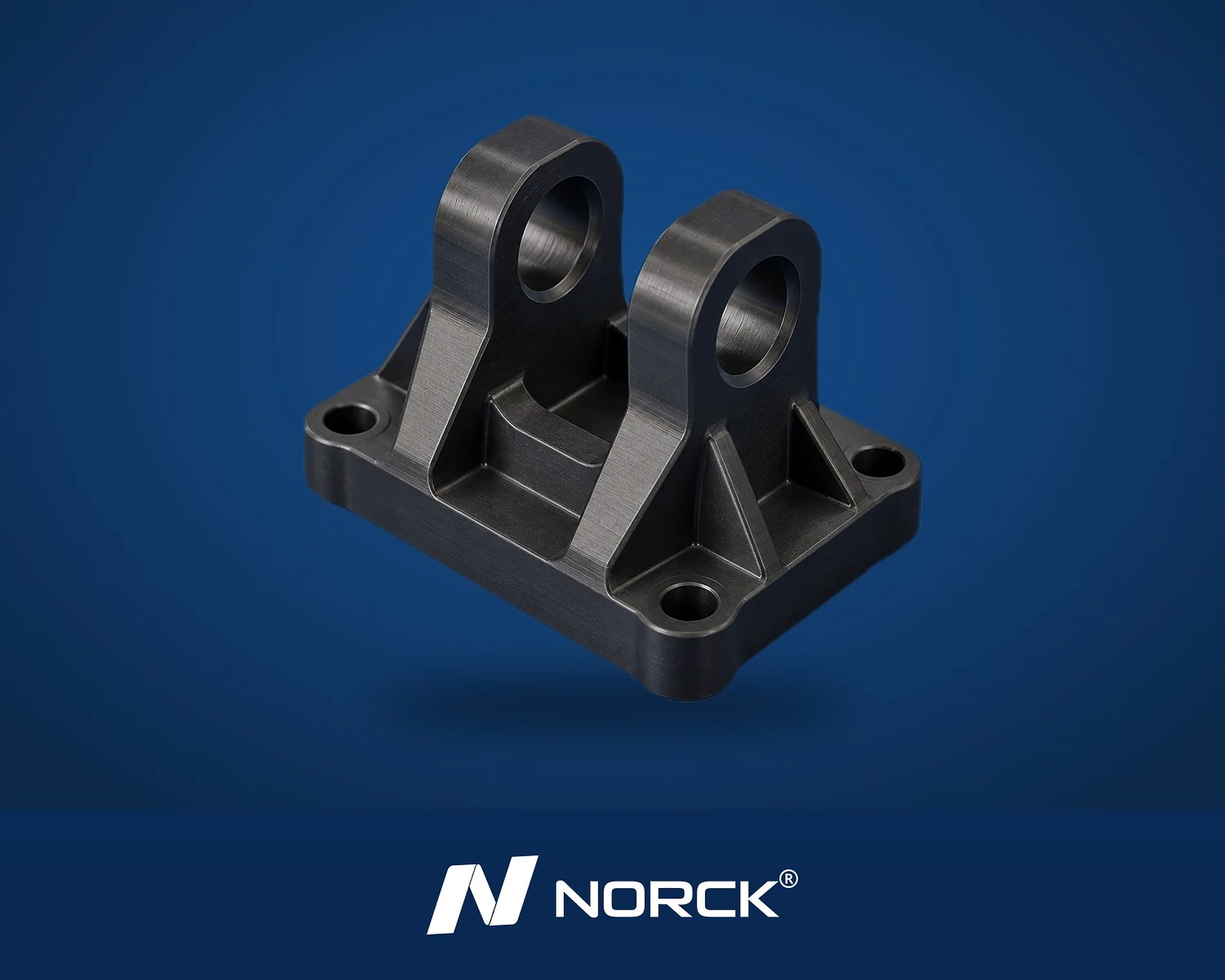
Norck is a custom plastic parts manufacturer for engineering teams that need precise, reliable parts, from the first prototype to production volumes. We make custom plastic parts by CNC machining, injection molding, urethane casting and 3D printing, and recommend the right process for your quantity, material and budget.
Every project starts with an engineering review. For molded parts, we use Moldflow simulation to prevent defects before the mold is cut. Norck operates under an ISO 9001:2015-certified quality system from Irvine, California and Mannheim, Germany, with production partners across the US and Europe. Our parts go into medical, aerospace, automotive, robotics, electronics and consumer products.
| Process | Best for |
|---|---|
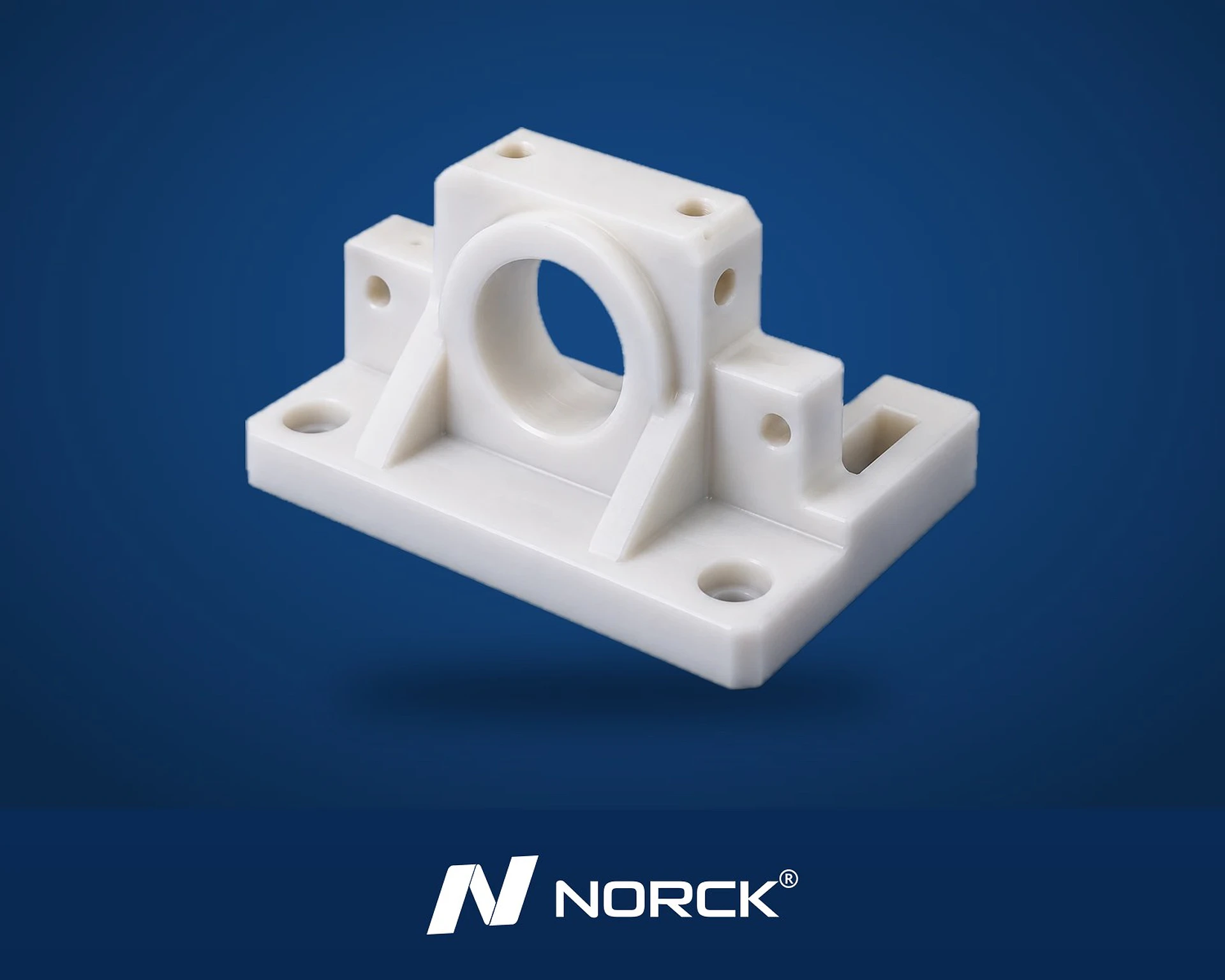
| Plastic CNC machining (milling and turning) | Precision parts, tight tolerances, PEEK/Delrin parts, prototypes in the final material |
| 3D printing (FDM, SLA, SLS, MJF, PolyJet, Carbon DLS) | Fast prototypes, complex shapes, small series |
| Urethane casting | Production-like parts without a steel mold |
| Low-volume injection molding (aluminum or prototype molds) | Small batch production, bridge tooling, market tests |
| Production injection molding (steel molds) | High volumes at the lowest cost per part |
| Liquid silicone rubber (LSR) molding | Silicone seals, gaskets and soft medical parts |
| Overmolding and insert molding | Soft-touch grips, metal inserts, multi-material parts |
 Trusted by Engineers and Researchers at Fortune 500 Companies for Precision Manufacturing
Trusted manufacturing experience with leading global companies.
You don’t need to order 100,000 parts to use injection molding. For small batch plastic injection, we use aluminum or prototype molds that cost much less and are ready faster than hardened steel tools. This is ideal for pilot runs, market tests, spare parts and products with a few thousand units per year. When volumes grow, the design moves to a production steel mold.
| Material | Properties | Typical use |
|---|---|---|
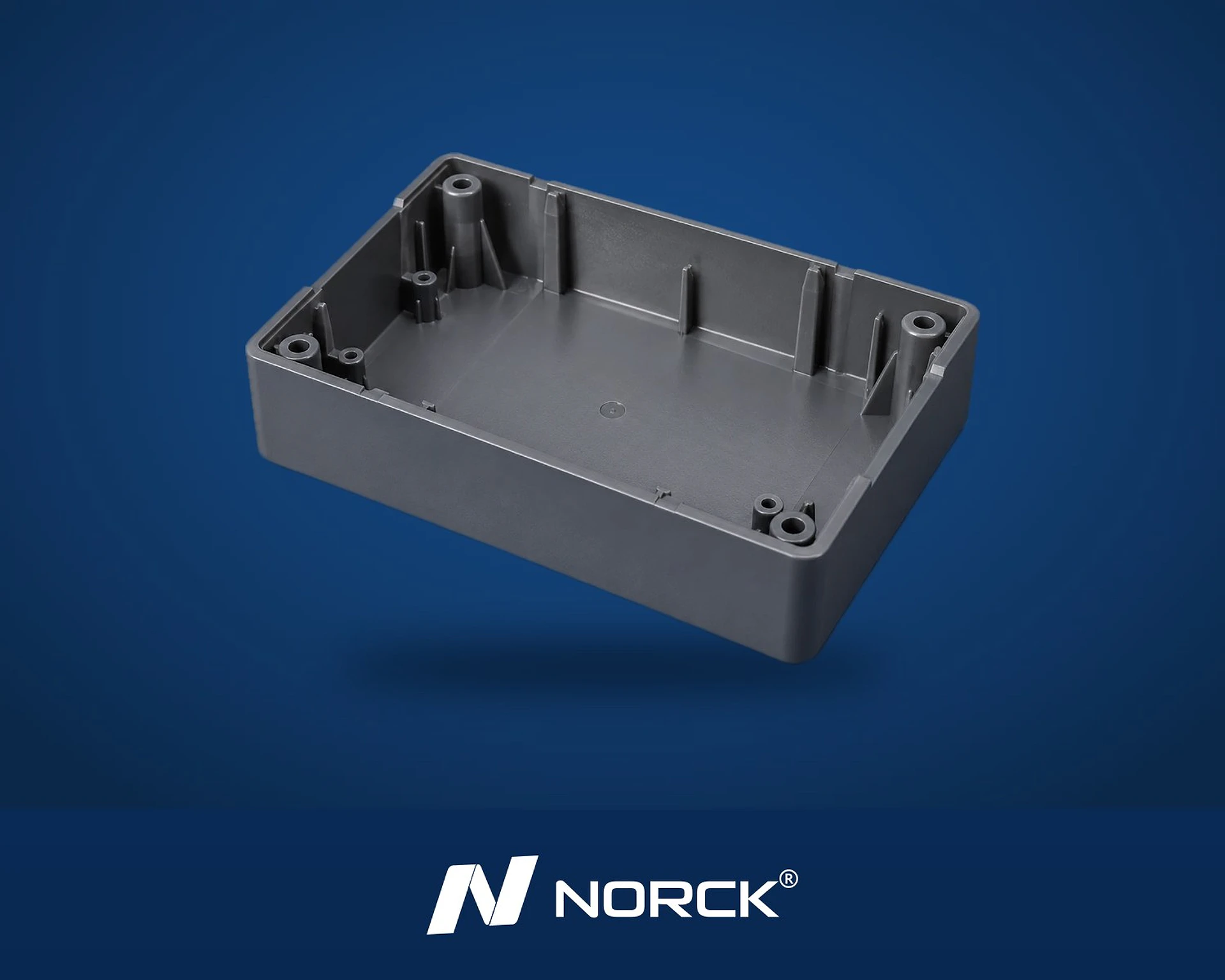
| ABS | Tough, low cost, easy to finish | Housings, enclosures, consumer products |
| Polycarbonate (PC) | Impact resistant, can be transparent | Covers, lenses, guards |
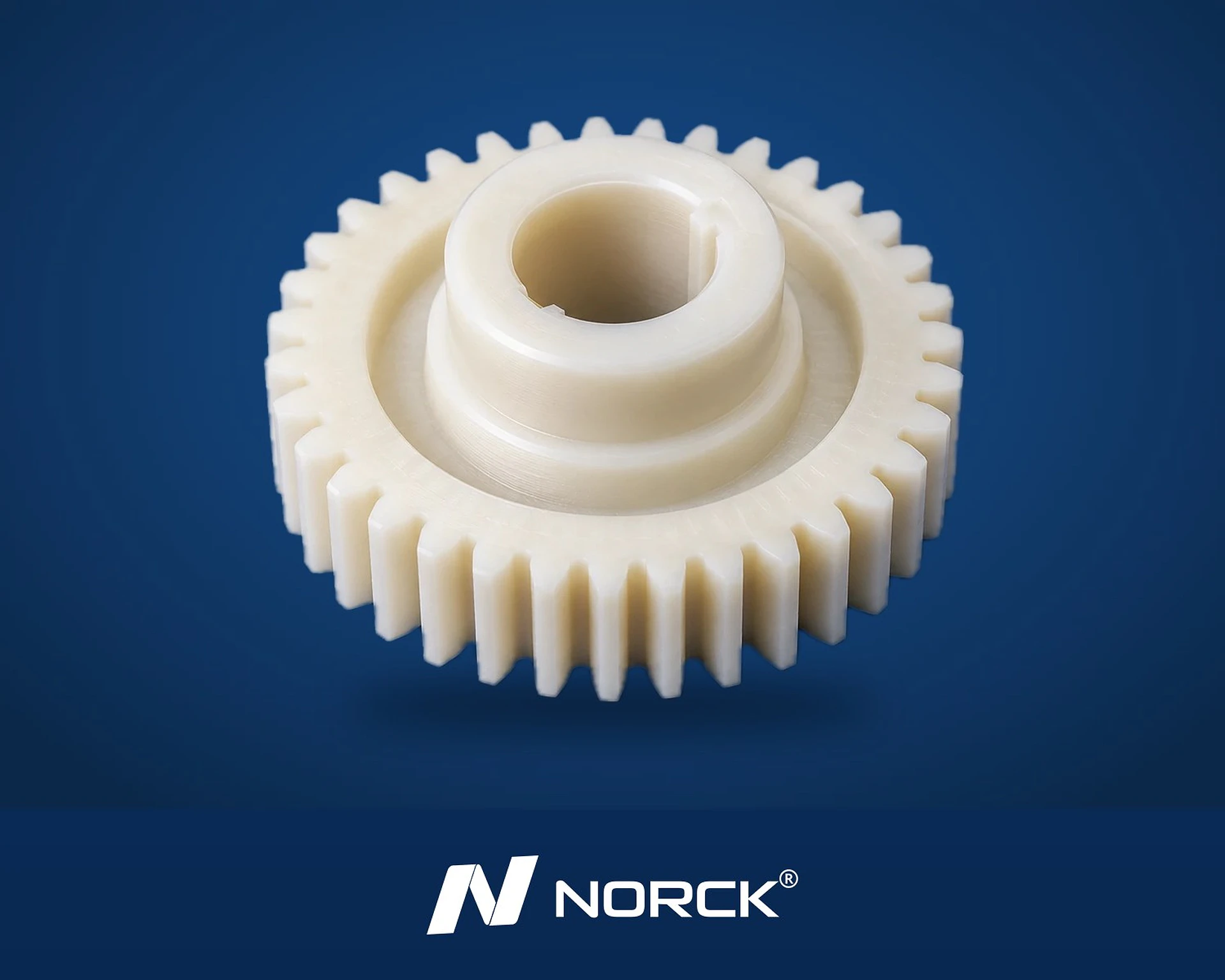
| Nylon (PA6, PA66, glass-filled) | Strong, wear resistant | Gears, bushings, structural parts |
| Delrin / acetal (POM) | Low friction, very dimensionally stable | Gears, bearings, precision mechanical parts |
| PEEK | High temperature and chemical resistance, biocompatible grades | Aerospace, medical, semiconductor parts |
| PEI (Ultem) | High heat resistance, strong, flame resistant | Aerospace, medical, electronics |
| PTFE (Teflon) | Lowest friction, chemical resistant | Seals, insulators, lab equipment |
| Polypropylene (PP) | Chemical resistant, living hinges | Containers, clips, medical disposables |
| HDPE | Chemical resistant, lightweight, low cost | Tanks, fittings, containers |
| PMMA (acrylic) | Clear, rigid, good optical quality | Light covers, displays, lenses |
| PET | Strong, stable, low moisture absorption | Gears, bearings, precision parts |
| PVC / CPVC | Chemical and corrosion resistant, flame retardant | Fittings, chemical equipment, covers |
| TPU / TPE and silicone (LSR) | Flexible, soft-touch | Seals, grips, gaskets |
| Quantity and requirement | Recommended process |
|---|---|
| 1–10 parts, need them fast | 3D printing |
| 1–500 parts, tight tolerances or PEEK / Delrin | Plastic CNC machining |
| Round parts such as shafts and bushings | CNC turning |
| 10–100 parts that look and feel like molded parts | Urethane casting |
| Soft silicone parts such as seals and gaskets | Liquid silicone rubber (LSR) molding |
| 100–10,000 parts | Low-volume injection molding |
| 10,000+ parts | Production injection molding |
For metal parts, see our custom metal parts page.
| Process family | How it works | Advantages | Limits |
|---|---|---|---|
| Additive (3D printing) | Builds the part layer by layer from plastic or resin (FDM, SLA, SLS, MJF, PolyJet, Carbon DLS). | No tooling, low cost, complex shapes, wide choice of plastics and elastomers | Lower strength and surface quality than machined or molded parts |
| Subtractive (CNC machining) | A computer-controlled tool removes material from a solid block (milling) or a spinning bar (turning). | Accurate, no tooling, parts in the final material | More material waste; shape limited by tool access |
| Formative (injection molding, urethane casting, LSR) | Plastic or silicone is injected or poured into a mold and hardens into the part. | Lowest cost per part at volume, wide choice of materials and colors | Tooling cost and mold lead time |
CNC milling uses a rotating tool on a fixed workpiece and suits prismatic parts. CNC turning spins the workpiece against a cutting tool and suits round parts such as shafts and bushings.
| Industry | Typical parts |
|---|---|
| Medical | Orthoses and prostheses, device housings, disposables |
| Aerospace and automotive | Prototypes, interior control units, brackets |
| Robotics | Robot bodies, covers, gears |
| Electronics | Enclosures, insulators, covers |
| Consumer products | Enclosures, product bodies, grips |
| Industrial and hardware | Jigs and fixtures, bearings, handles, covers |
| Education and R&D | Concept prototypes, teaching models |
Look for a manufacturer that offers several processes, gives engineering feedback on your design, and can move your part from prototype to production without changing supplier. Also check the quality system (Norck: ISO 9001:2015), material options and documentation.
It depends on quantity. For a few parts, 3D printing or CNC machining is cheapest because there is no tooling. From a few hundred parts, injection molding usually becomes cheaper per part, even after the mold cost.
Yes. We use aluminum or prototype molds for runs of about 100 to 10,000 parts. They cost less and are ready faster than production steel molds.
Mold cost depends on part size, complexity, number of cavities and the mold material. A simple aluminum prototype mold costs much less than a multi-cavity steel production mold. Send your design for a quote with mold and part prices shown separately.
ABS and polycarbonate are common for housings, nylon and Delrin for mechanical parts, and PEEK for high temperatures or medical use. Our engineers recommend a material based on load, temperature, chemicals and cost.
Yes. Plastic CNC machining holds tight tolerances on materials like Delrin and PEEK. Some plastics expand with temperature and moisture, so our engineers will confirm what is realistic for your material.
Upload your CAD file with quantity and material. We’ll recommend the best process and quote it.
“The services were excellent; my needs were addressed effectively, I expect this custom blade to be preferred and to be reordered in the future.”
“We finally made the first test, and it was great. The cut is exactly what we were looking for.”

“I’ve received excellent advice to resolve the issues that popped up after the first prototype. Absolutely satisfied. I don’t see anything to improve at this point and believe this is the start of a long collaboration.”

“We needed a reliable partner that could deliver high-quality parts quickly – and Norck did just that. The delivery was spot-on, and the team at University of Stavanger was really pleased with the result. Great job!”

“I am satisfied with the whole process. The products allowed us to test samples at a reasonable price, and the engineering services were excellent.”

“Overall, we are satisfied with your products—they work well and are made exactly as per the drawings with all the details. Your engineering services are at a high level.”

“The Norck team did a great job, and I got the parts before I expected. They were very responsive, and we ended up with a great solution.”
“When things work this smoothly, and you know you’ll get fast, knowledgeable support whenever you need it, there’s no reason to look elsewhere.”

“Our collaboration with Norck has been excellent. From the start, it was clear that they genuinely cared about understanding our unique needs and delivering solutions tailored to our requirements. We are incredibly satisfied with the quality of the products and the professionalism of the team.”

“The first view was OK. We are happy with results. The knives cut well, and our customers are happy.”

“We have installed these new blades in December and are super happy with the results. Thank you for providing these to us, we really needed them for our machine.”
“They're not just a supplier; they're an extension of our team. Their dedication to quality, precision, and customer satisfaction is second to none. We're confident that with Norck by our side, we can bring our innovative designs to life and achieve even greater success.”