 English
 Deutsch
 Español
 Français
 Italiano
 Nederlands
 Dansk
 Svenska
 Norsk
 Czech
 Polski
 Português
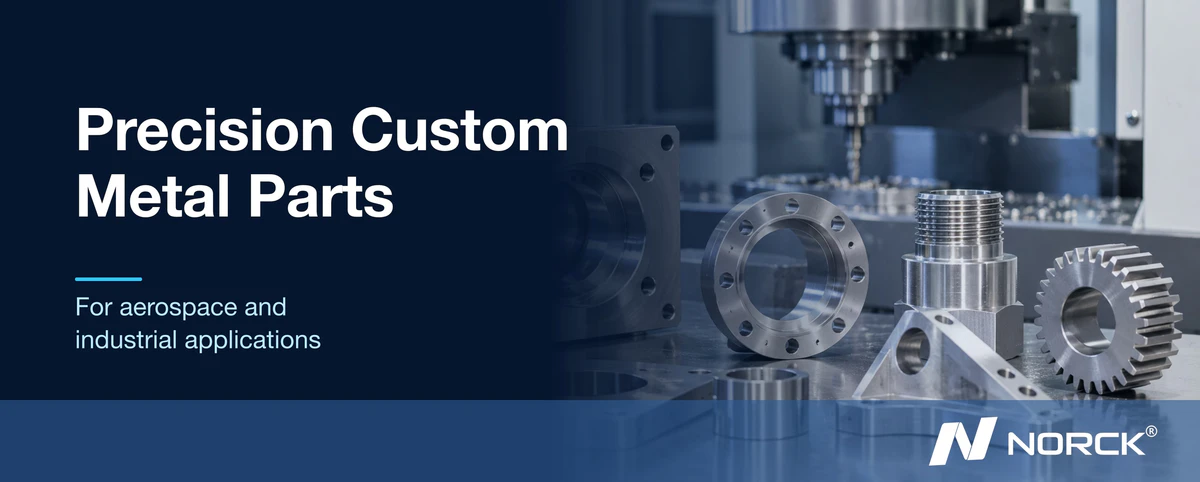
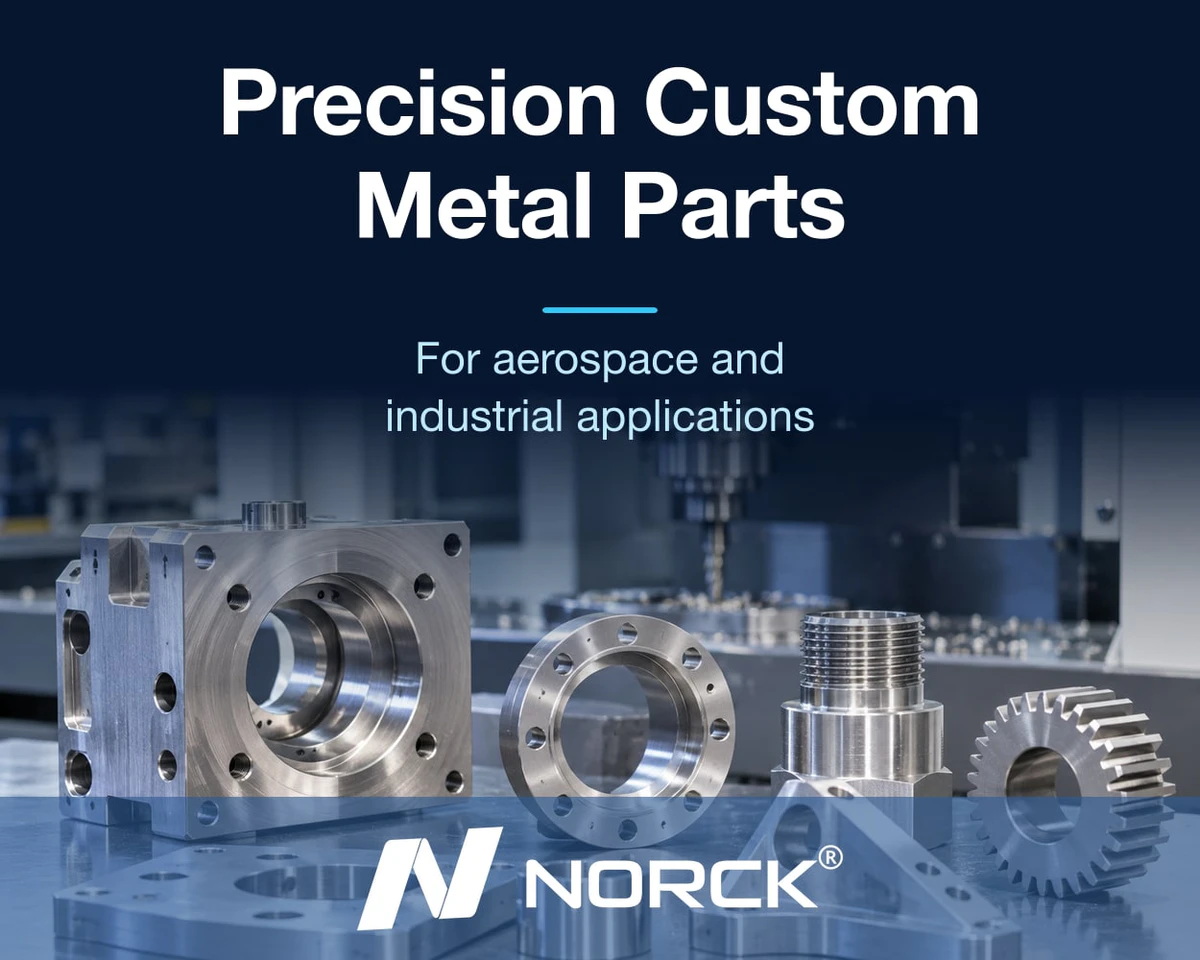
Precision Custom Metal Parts for Aerospace and Industrial Applications
Custom metal parts are components made to a customer's own design, choice of metal and size requirements rather than bought from a catalog. In aerospace, they include brackets, fittings and housings where a tiny size error can cause a part to fail inspection, and where every part must come with records showing where its metal came from. In industrial equipment, they include shafts, wear plates, tools and cutting blades that must survive rough use and long working hours.
This guide explains which metals and processes are used for custom made metal parts, how aerospace and industrial requirements differ, how custom steel parts perform in a demanding application like plastic recycling, and how to avoid the most common sourcing and quality problems.
What makes a metal part "custom" and when do you need one?
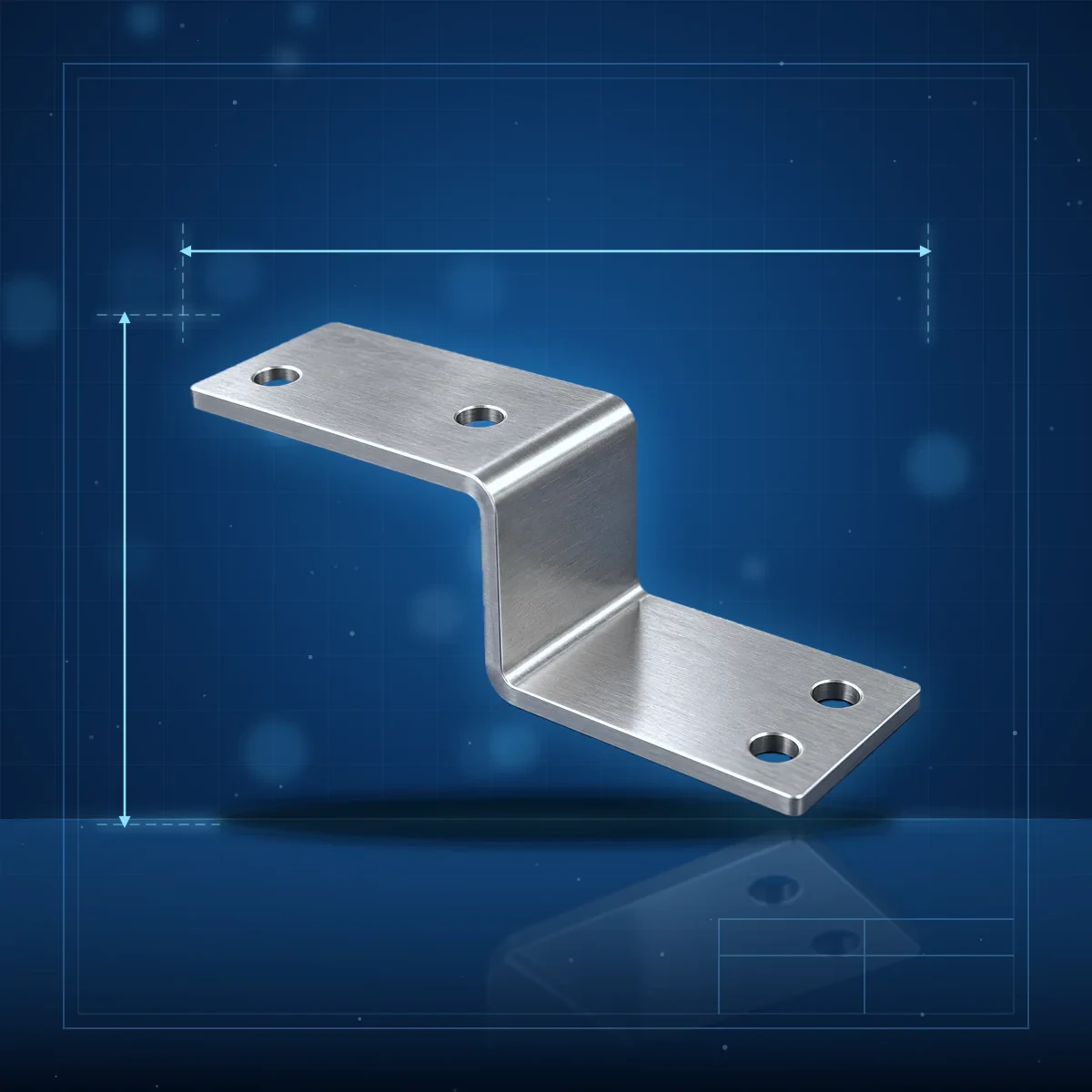
A part is custom when its shape, metal, hardening or surface finish is set by the buyer's design, usually shared as a 3D model and a drawing with key measurements. Engineers choose custom parts when a standard part cannot carry the load, fit the available space, meet a weight target or last long enough.
Common reasons include an unusual mounting layout, a need to remove weight, a harsh environment such as heat or moisture that calls for a specific metal, and replacement parts for older machines whose original maker no longer exists.
Which metals are used for precision custom metal parts?
The choice of metal decides strength, weight, ease of machining and cost before any work begins.
| Metal | Main advantages | Common uses |
|---|---|---|
| Standard aluminum | Easy to machine, resists corrosion, low cost | Enclosures, fixtures, brackets |
| High-strength aluminum | Strong for its weight | Aircraft fittings and brackets |
| Titanium | Very strong and light, resists corrosion | Aircraft fittings, engine mounts, fasteners |
| Stainless steel | Strong and rust resistant | Valve and actuator parts |
| Alloy steel | Tough, handles repeated loads | Shafts, gears, rotors |
| Tool steel | Very hard, resists wear | Cutting blades, punches, dies |
| Heat-resistant nickel alloys | Keep their strength at high temperatures | Engine and exhaust parts |
Aluminum dominates prototypes and lightweight structures. Custom steel parts dominate where wear, impact or fatigue drive the design.
How are custom made metal parts manufactured?
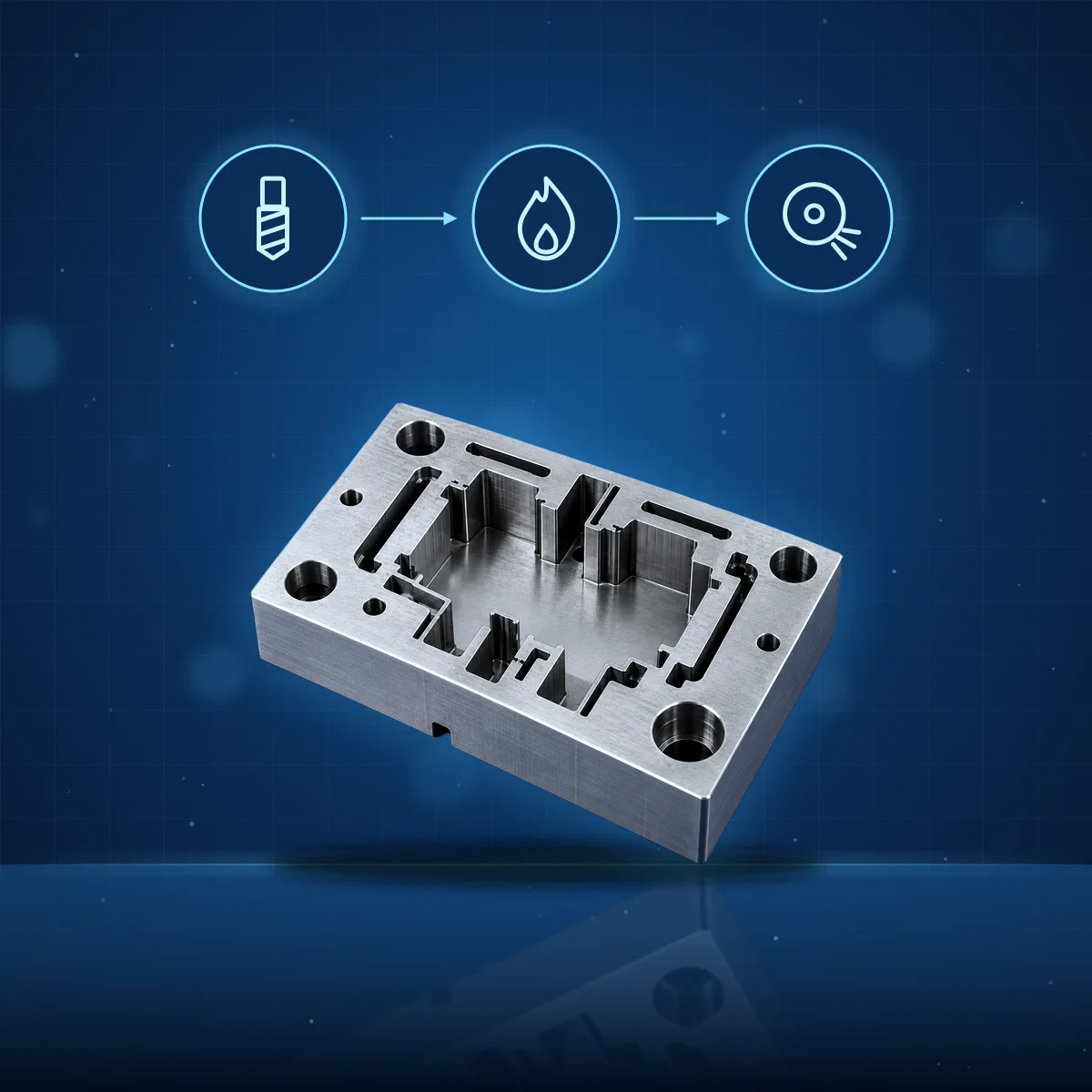
Most precision parts go through two or three steps, for example computer-controlled machining, then hardening, then fine grinding.
Milling uses a spinning cutter to shape a solid block, which makes it ideal for flat-sided parts, pockets and complex shapes. Turning spins the part against a cutting tool and is the standard method for shafts, bushings and threaded parts.
Grinding uses an abrasive wheel to remove very thin layers, so it is used for hardened blades and surfaces that must be extremely accurate. Wire cutting uses a thin electrified wire to cut through hardened tool steel and create sharp inside corners. Sheet metal parts such as enclosures, brackets and panels are laser-cut from flat sheets and then bent into shape.
Very tight size limits raise cost quickly, so ask for them only where they matter, such as holes, surfaces that touch other parts, and cutting edges.
How do aerospace and industrial requirements differ?
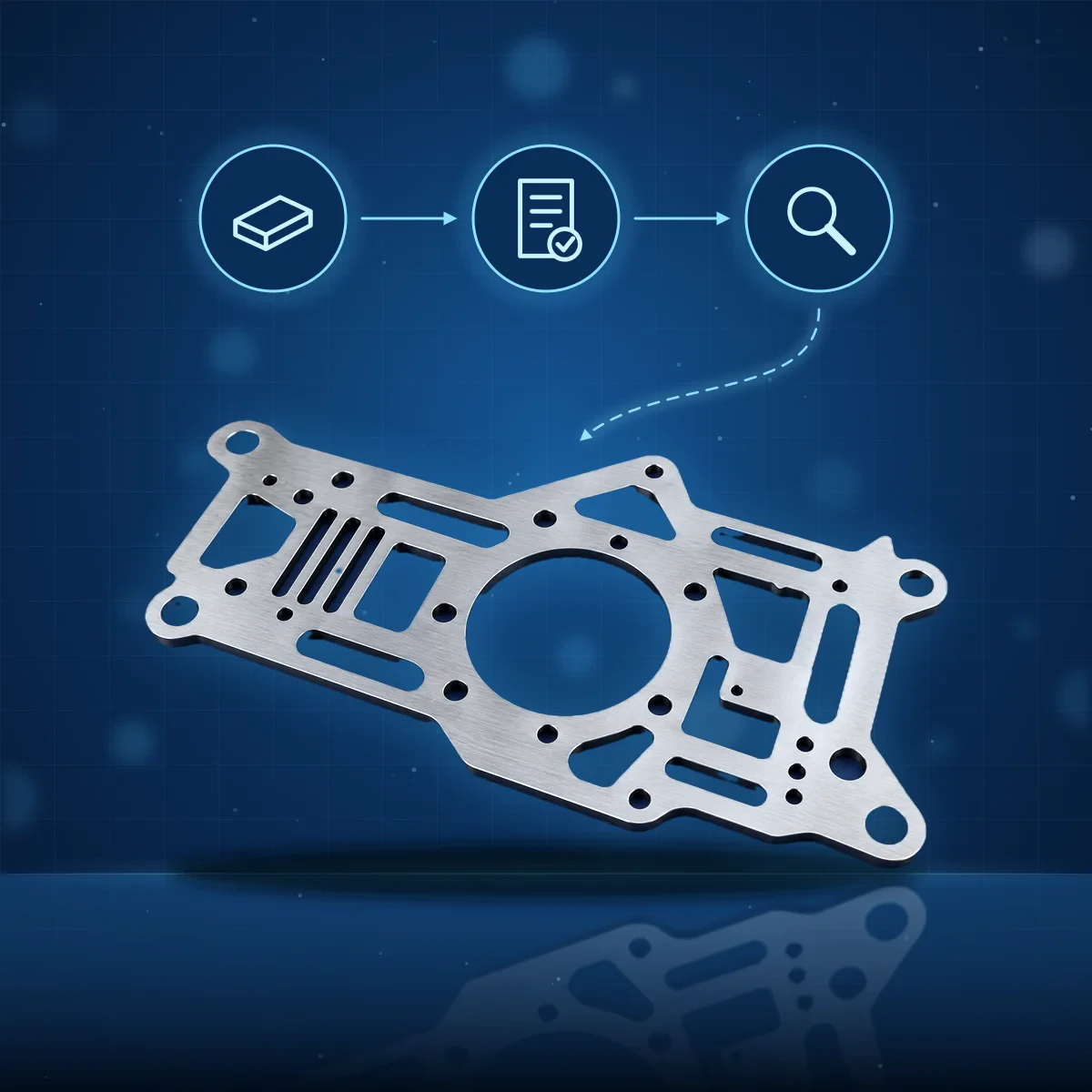
Aerospace parts are judged on documentation and repeatability as much as on dimensions. Industrial parts are judged mainly on service life and cost per operating hour.
For aerospace work, the supplier must hold an aerospace quality approval, every batch of metal must be traceable back to the mill that produced it, and the first part made is fully measured and documented. What matters most is low weight, accuracy and resistance to cracking over years of use.
General industrial buyers usually accept a standard quality approval, material records on request and a sample measurement report. Their focus is how long the part lasts, how much machine downtime it prevents and what it costs to replace.
Example: an aluminum bracket for aircraft electronics needs a protective surface coating and a full report on the first part made. A steel conveyor drive shaft needs the right hardness, a straight profile and a good keyway fit, with far less paperwork.
Industrial example: which blades are used in plastic recycling?
Plastic recycling blades are a clear case of custom steel parts where material and geometry directly control throughput and downtime. Each machine stage uses a different blade type.
| Blade type | Machine and job | Typical material | What it needs most |
|---|---|---|---|
| Rotor and fixed knives | Granulators; cut plastic into small flakes | Hardened tool steel | Long-lasting sharp edge, precise setting |
| Square reversible knives | Single-shaft shredders; tear bulky parts and film | Hardened tool steel with four usable edges | Resistance to impact |
| Hooked cutter discs | Twin-shaft shredders; slow, powerful tearing | Hardened alloy or tool steel | Resistance to cracking |
| Pelletizer knives | Pelletizers; cut melted plastic into pellets | Tool steel or carbide-tipped steel | Sharpness, wear resistance |
| Agglomerator blades | Film compactors | Wear-resistant tool steel | Resistance to heat and friction |
Why does blade material matter so much?
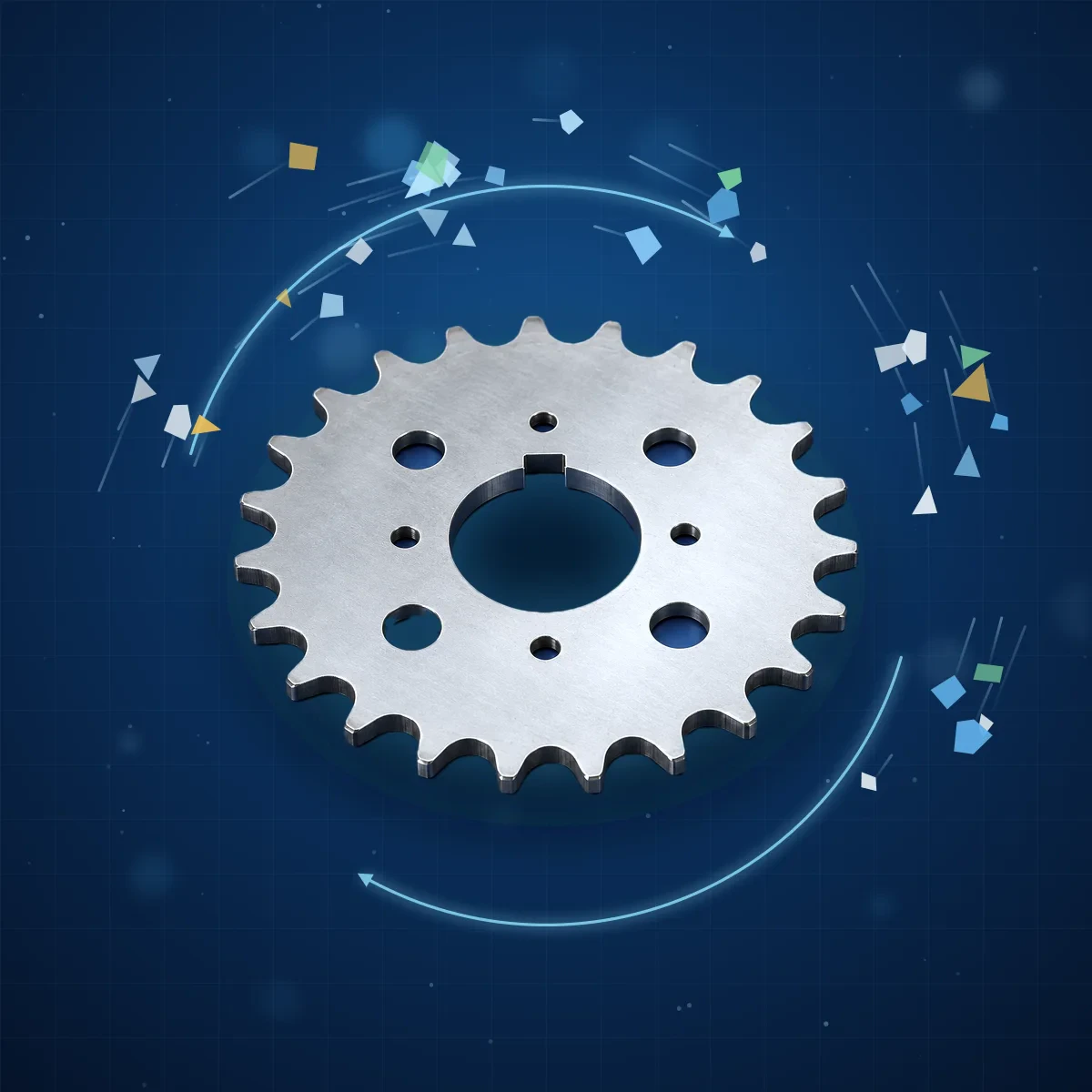
A harder blade stays sharp longer but breaks more easily. A very hard granulator knife lasts longer on clean plastic bottles, but it can chip if a bolt or stone gets into the machine. Plastics mixed with glass or mineral fillers wear blades down fast, so tougher, more wear-resistant steels or carbide tips are often worth the extra cost.
Blade shape matters too. The edge must be sharp enough to cut cleanly but thick enough not to break, and the gap between moving and fixed knives must be set very small. Blades should be ground flat after hardening so every blade in a set fits the same way.
What are the most common problems with custom metal parts, and how are they solved?
| Problem | Likely cause | Solution |
|---|---|---|
| Part bends or warps after hardening | Stress left in the metal from machining | Rough-cut, relieve the stress with heat, then finish the part |
| Blade edges chip | Blade too hard for the impacts, or knives set wrong | Use a slightly softer or tougher steel; reset the knife gap |
| Blades wear out fast | Abrasive plastics, lower-grade steel | Switch to a more wear-resistant steel or carbide tips |
| Threads seize when tightened | Stainless steel or titanium rubbing on the same metal | Use anti-seize paste, a different metal or a coating |
| Parts don't fit at assembly | Unclear drawing, measurements not tied to how parts fit together | Mark the key fit features clearly; keep tight limits only there |
| Aerospace batch rejected | Missing material records or first-part report | Agree on all paperwork when requesting the quote |
How should you source custom metal parts?
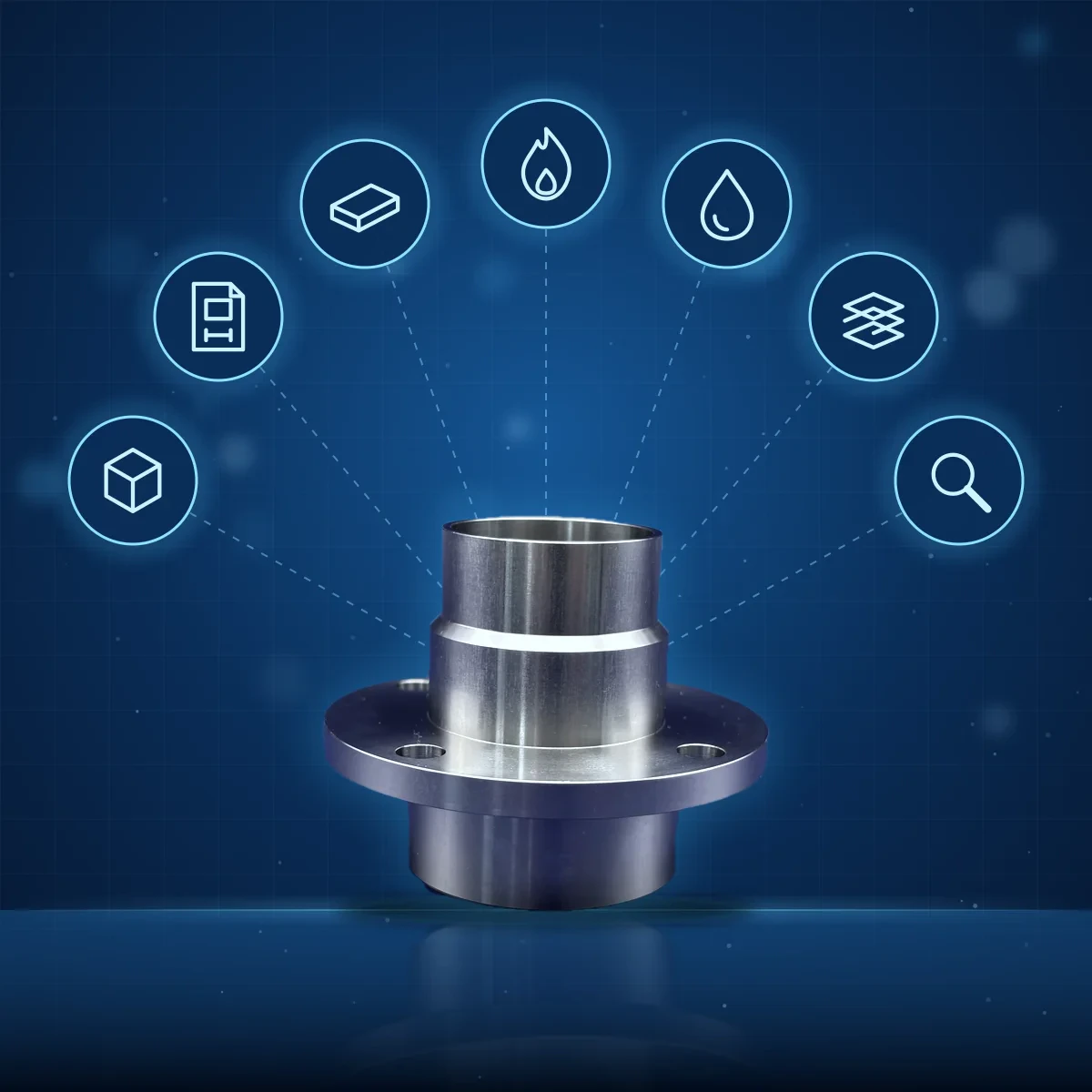
A complete quote request prevents most quality issues. Send the 3D model and drawing, the exact metal, any hardening needs, the surface finish and coating, the quantity, and the inspection reports you expect.
Judge suppliers on the range of processes they offer, how they measure parts, whether they can trace materials, and whether they suggest design changes that make parts easier to produce, not on unit price alone. Manufacturing partners such as Norck make parts directly from customer design files using machining and sheet metal processes, which lets engineering teams move from prototype to production with one supplier and one set of drawings.
Conclusion
The right custom metal parts come from matching three things to the job: the metal, the manufacturing process and the level of accuracy. Aerospace parts demand light weight, precision and complete records, while industrial parts such as shafts and recycling blades are judged on how long they last and how much downtime they prevent.
Most problems, from warped parts to chipped blades, can be avoided with a clear drawing, a sensible choice of metal and a complete quote request. Working with an experienced manufacturing partner such as Norck helps engineers and buyers get custom made metal parts and custom steel parts that fit the first time and perform reliably in service.
Frequently asked questions
What are custom metal parts?
Custom metal parts are components made to a buyer's own design, metal choice and size requirements, usually by machining, sheet metal work or grinding.
How accurate can custom metal parts be?
Standard machining is accurate to roughly the thickness of a few sheets of paper. Precision machining and grinding go much finer, to a small fraction of the width of a human hair on key features.
Which metal is best for aerospace custom parts?
It depends on the job. High-strength aluminum suits light structural parts, titanium suits strong, weight-critical fittings, and nickel alloys suit hot engine parts.
Why choose custom steel parts over aluminum?
Steel is harder, wears more slowly and handles repeated loads better, which matters for shafts, gears, tools and blades. Aluminum is the better choice when low weight and lower machining cost matter more.
What steel is used for plastic granulator blades?
Hardened tool steel is the most common choice, because it balances a long-lasting edge with enough toughness to resist chipping.
What approvals matter for aerospace parts?
An aerospace-approved quality system at the supplier, approved partners for special steps like hardening and crack testing, a full report on the first part made, and records tracing each batch of metal.
How can I reduce the cost of custom made metal parts?
Ask for tight size limits only where parts fit together, use standard stock sizes, avoid deep narrow pockets and sharp inside corners, and order sensible batch sizes.